Blog Analytics, growth and chat, explained with real numbers · Page 2
Practical notes from the team building TapCub: how metrics are defined, where funnels break, what AI crawlers take from your site, and how support teams turn conversations into conversions.
Browse every article
Filter by category or search a keyword. Every article links to the report or setting it talks about.
230 articles · page 2 of 5
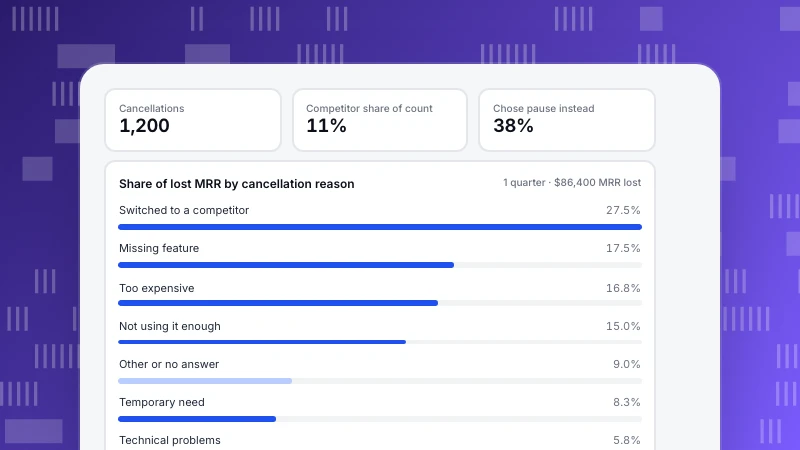
Cancellation reasons: the common ones, how to ask, and what they cost
Why customers cancel subscriptions, how to design a cancellation survey that does not block cancelling, and a worked quarter of 1,200 cancellations where weighting by revenue changed which problem to fix first.
Read more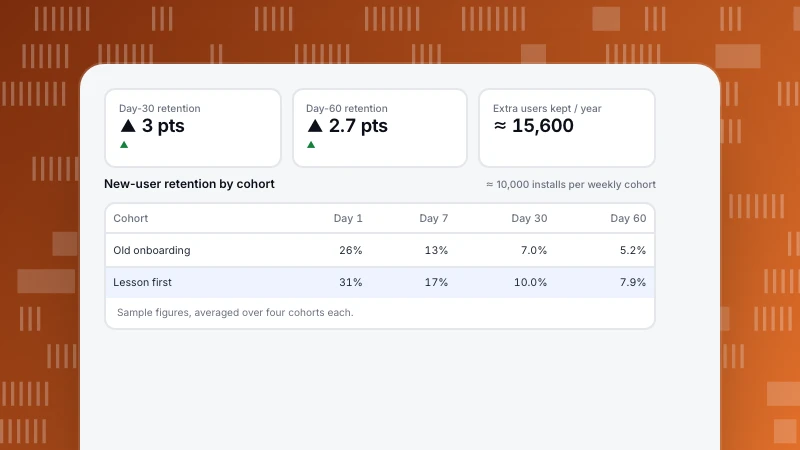
App retention rate: how to calculate it, read the curve and improve it
App retention rate is the share of new users who come back after N days. The formula, why classic, range and unbounded retention give different numbers, what a healthy curve looks like, and a worked onboarding change measured by cohort.
Read more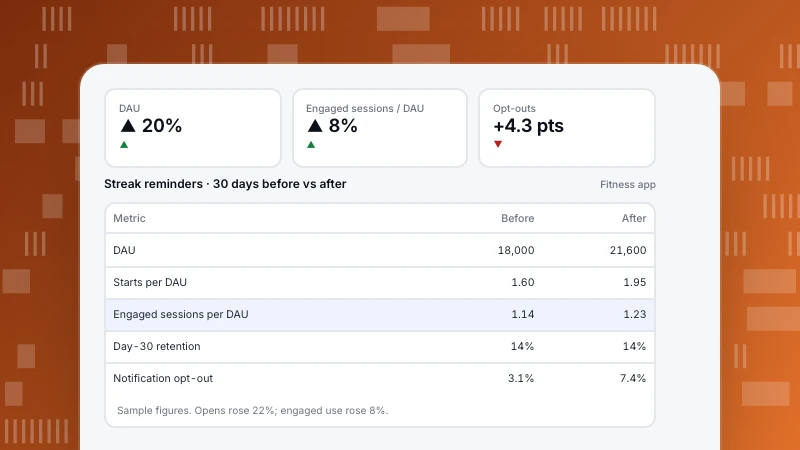
App engagement metrics: formulas, benchmarks by app type and a worked case
The app engagement metrics that matter, with formulas: DAU, MAU, stickiness, session length and interval, engaged sessions and retention. How to judge them by app type, and a worked case where opens rose 22% but real use barely moved.
Read more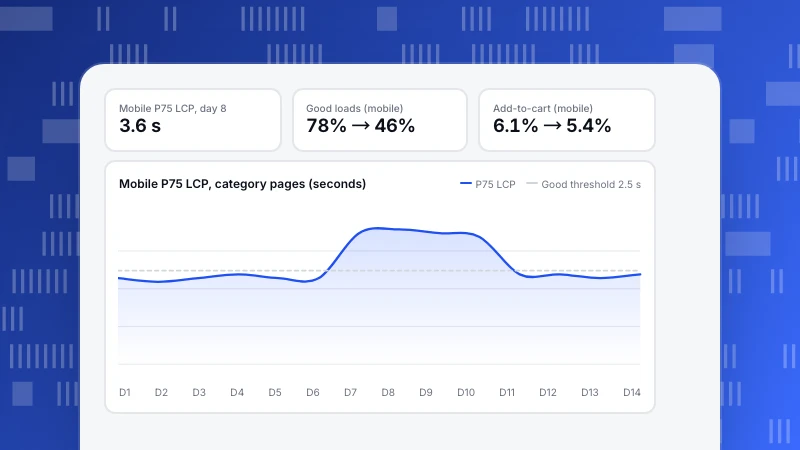
Web performance monitoring: RUM vs synthetic, metrics and a worked regression
How to monitor website performance continuously: real user monitoring vs synthetic checks, Core Web Vitals at P75, and a worked release where mobile LCP jumped from 2.3 to 3.5 seconds and add-to-cart fell.
Read more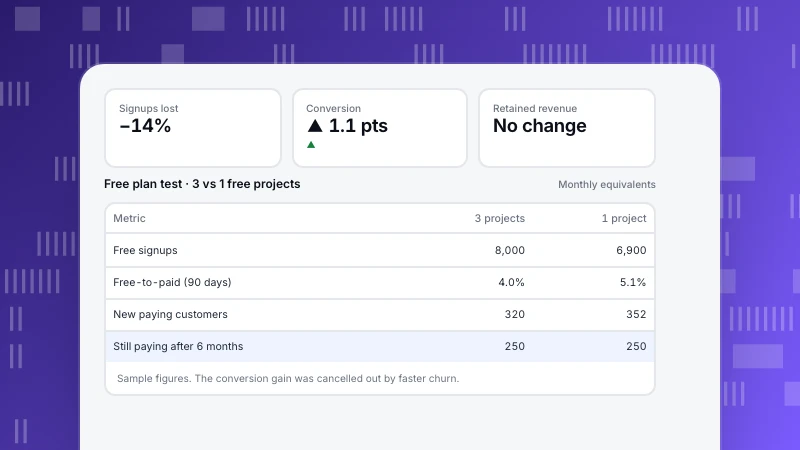
Freemium model: how it works, how to design the free plan, and a worked test
Freemium gives a basic plan away for free and charges for more. How it compares with free trials and reverse trials, how to set free-plan limits, and a worked test where a stricter free plan raised conversion but not revenue.
Read more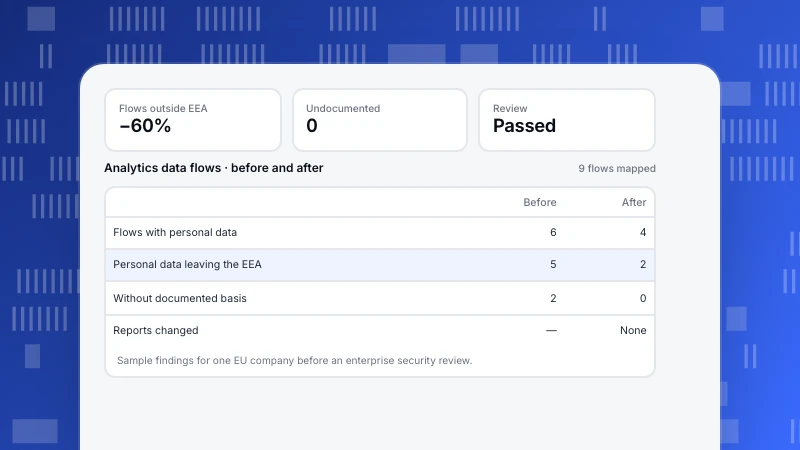
Data residency: what it means, the laws, and how to map your analytics data
Data residency is where your data is physically stored. How it differs from sovereignty and localization, the main laws (GDPR, PIPL and others), why analytics is affected, and a worked mapping of nine data flows.
Read more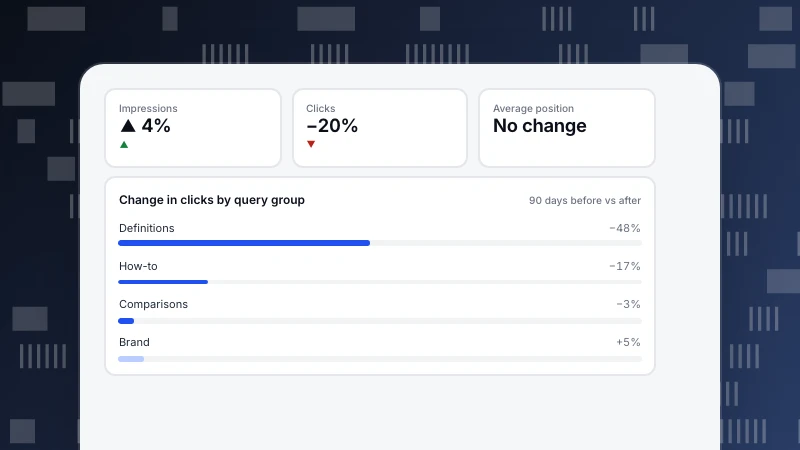
Zero-click searches: what the data shows and how to adapt
About 60% of Google searches now end without a click. What zero-click searches are, which queries are most affected, a worked before/after where impressions rose 4% and clicks fell 20%, and seven ways to adapt.
Read more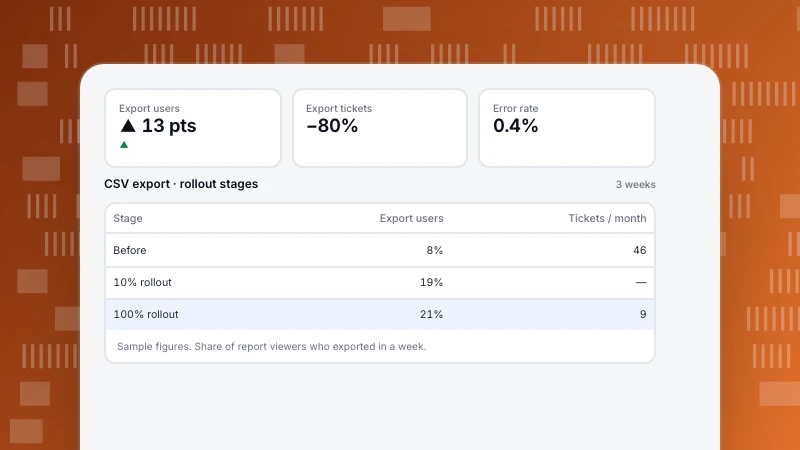
What does a product engineer do? Role, skills and a feature end to end
A product engineer owns product outcomes, not just code. How the role differs from software engineers and product managers, daily responsibilities, skills, and a worked feature from support tickets to full rollout.
Read more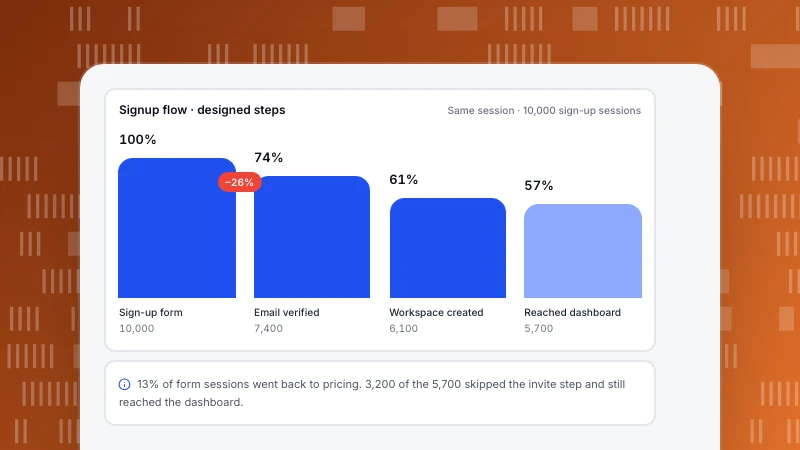
User flow: how to create one, examples and how to check it against real paths
What a user flow is, how it differs from a user journey and a wireflow, six steps to create one, four examples, and a worked signup flow compared with the paths 10,000 sessions actually took.
Read more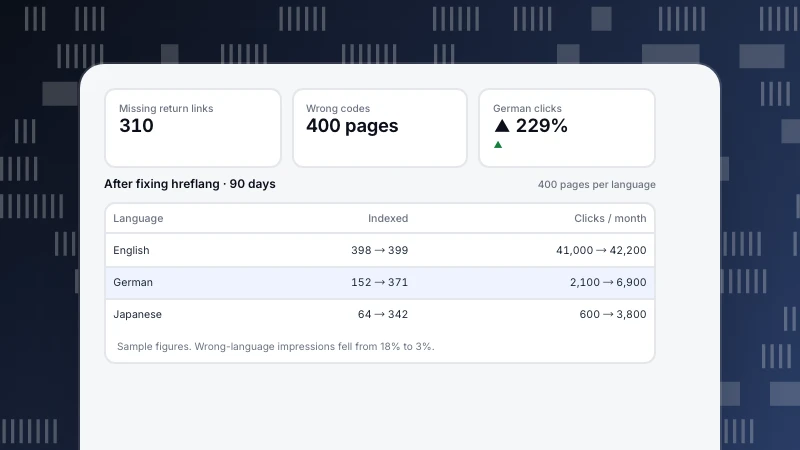
Multilingual SEO: URL structure, hreflang and a worked audit
How to rank a website in several languages: choosing a URL structure, hreflang rules that cause most errors, localizing keywords, and a worked audit where fixing hreflang tripled German clicks and lifted Japanese clicks sixfold.
Read more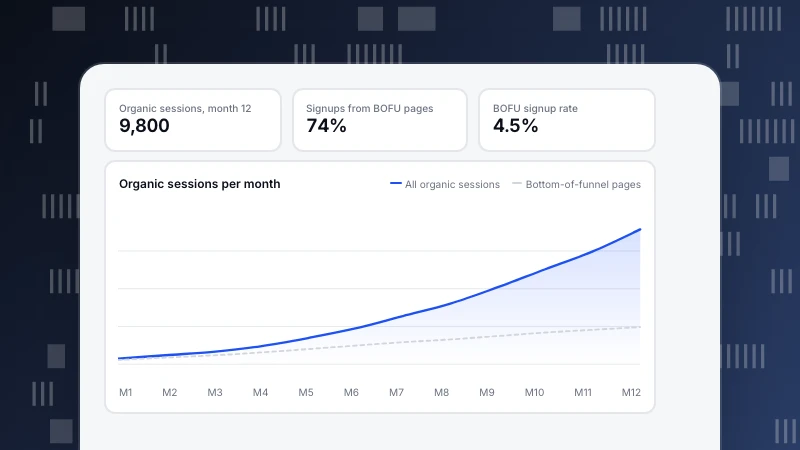
SEO for startups: a 12-month plan that turns searches into signups
When a startup should start SEO, which keywords a new domain can actually win, a 12-month plan, and a worked year where bottom-of-funnel pages brought 28% of organic traffic and 74% of signups.
Read more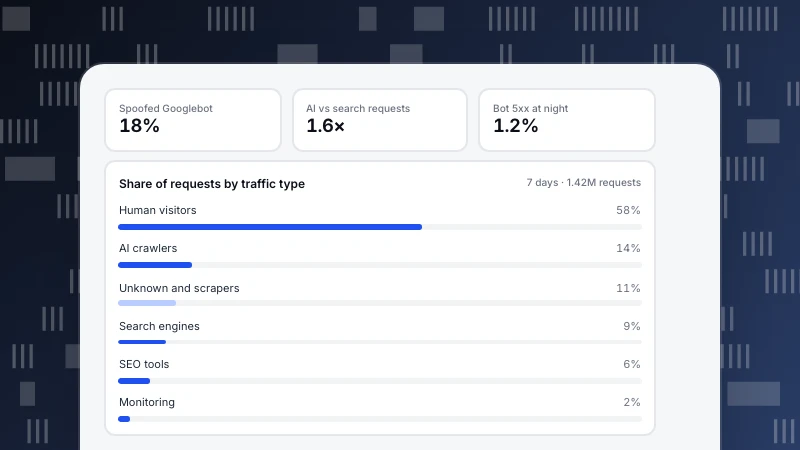
Web crawler: how it works, types of crawlers and how to verify them
What a web crawler is, the six steps every crawler follows, search vs AI training vs AI search crawlers, a worked week of server logs with spoofed Googlebots, and how to verify and control crawlers.
Read more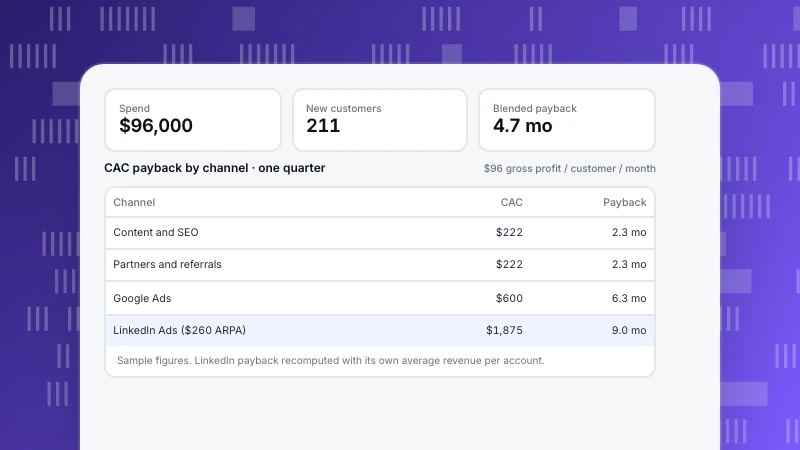
SaaS marketing: strategies, funnel and the metrics that decide budget
How SaaS marketing differs from one-off sales, the six-stage funnel and its metrics, eight strategies, and a worked quarter showing why channels should be compared on payback and churn, not CAC.
Read more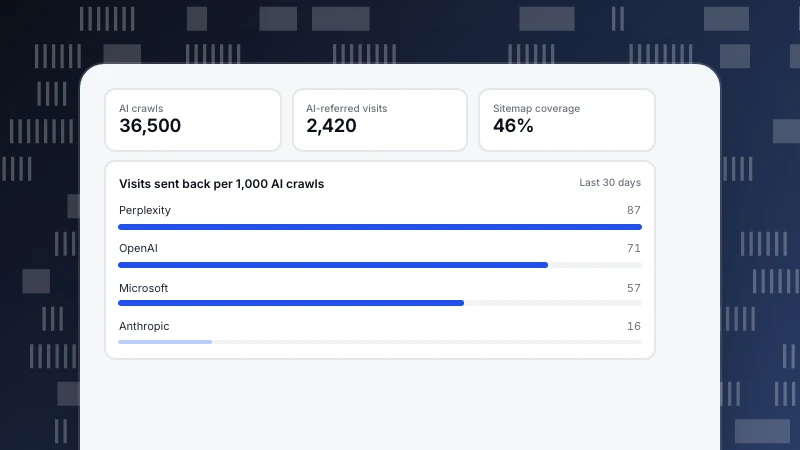
AI visibility: how to measure and improve it in AI search
AI visibility is how often AI answers read, cite and send people to your site. Three layers to measure, four metrics, a worked month of AI traffic by operator, and seven ways to improve it.
Read more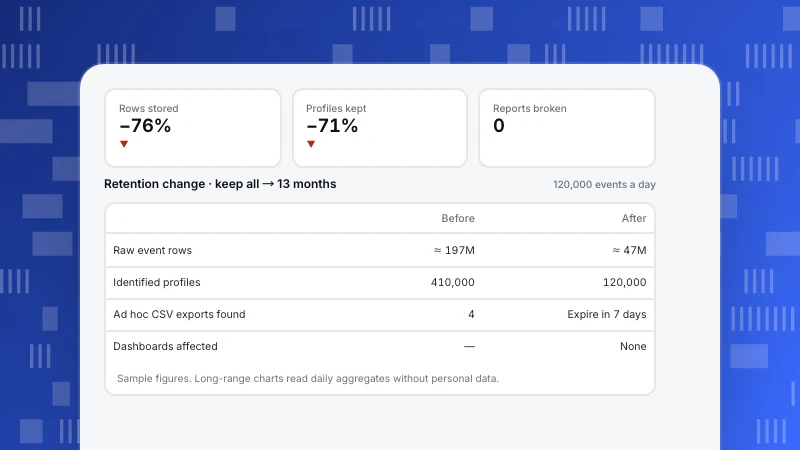
Data retention policy: legal basis, a sample schedule and how to enforce it
A data retention policy sets how long each type of data is kept and how it is deleted. The legal basis (GDPR, CCPA), what to include, a sample schedule for analytics data, and a worked example of moving from "keep everything" to 13 months.
Read more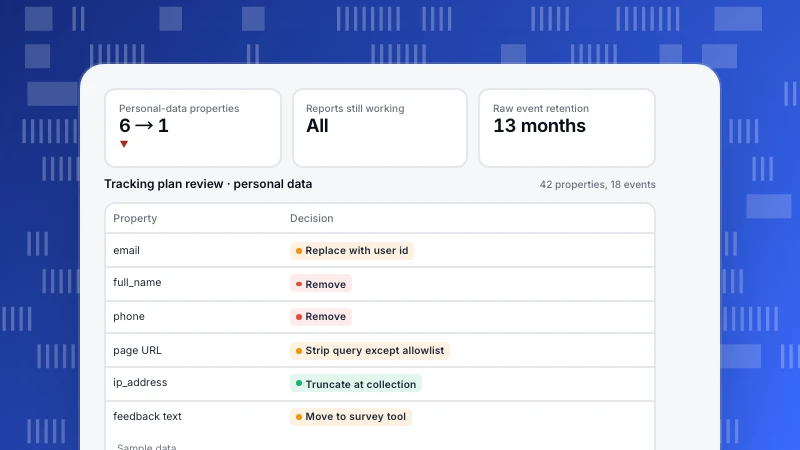
Privacy by design: the 7 principles, GDPR Article 25 and a worked example
Privacy by design builds privacy into products from the start. The seven principles translated into team practice, what GDPR Article 25 requires, a tracking-plan review that cut personal-data fields from six to one, and a checklist.
Read more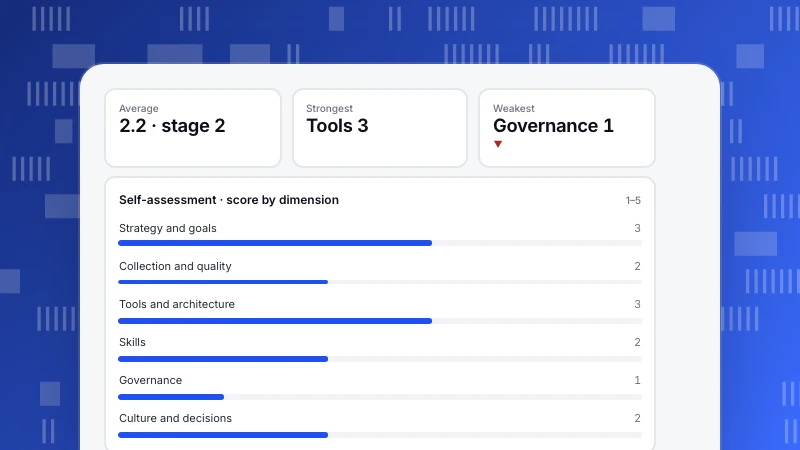
Data maturity model: five stages, a self-assessment and what to fix first
A data maturity model shows how organizations progress from ad hoc spreadsheets to data embedded in decisions. Five stages, six dimensions to score, a worked self-assessment where tools outran governance, and the questions to ask.
Read more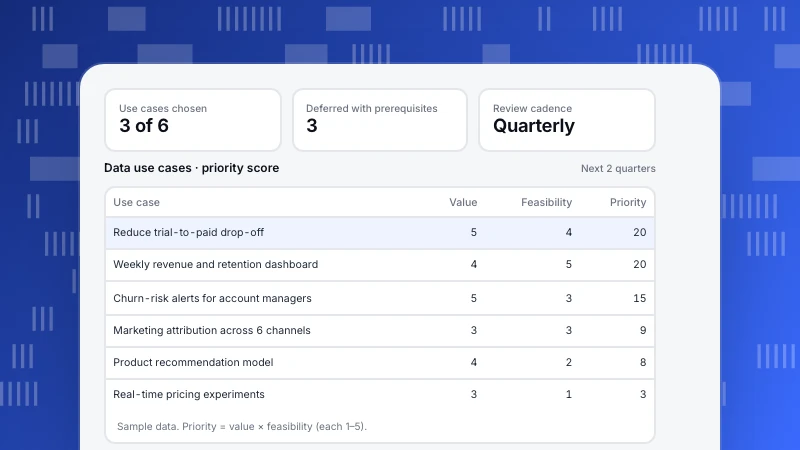
Data strategy: components, a worked example and a one-page plan
A data strategy links business goals to how data is collected, governed and used. Offense vs defense, the seven components, a worked example scoring six use cases into a 90-day plan, five steps to write one and the mistakes that stall it.
Read more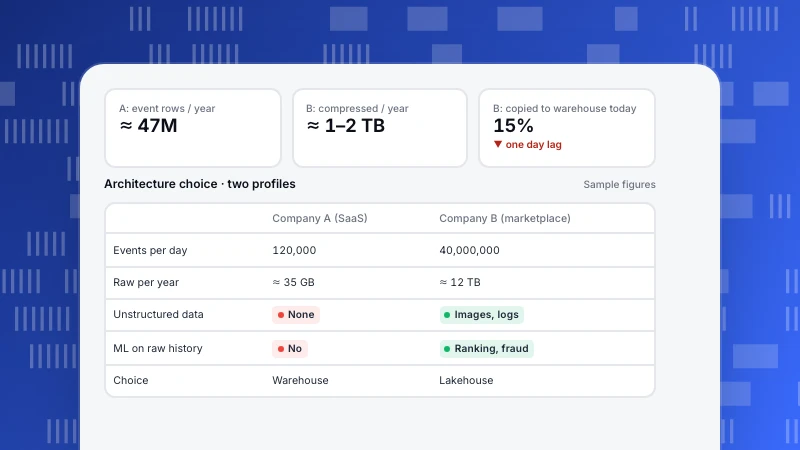
Data lakehouse vs data warehouse (and data lake): how to choose
A warehouse stores modeled tables for SQL, a lake stores raw files cheaply, and a lakehouse adds warehouse features to lake storage. A three-way comparison, why lakehouses appeared, two worked company examples and a decision checklist.
Read more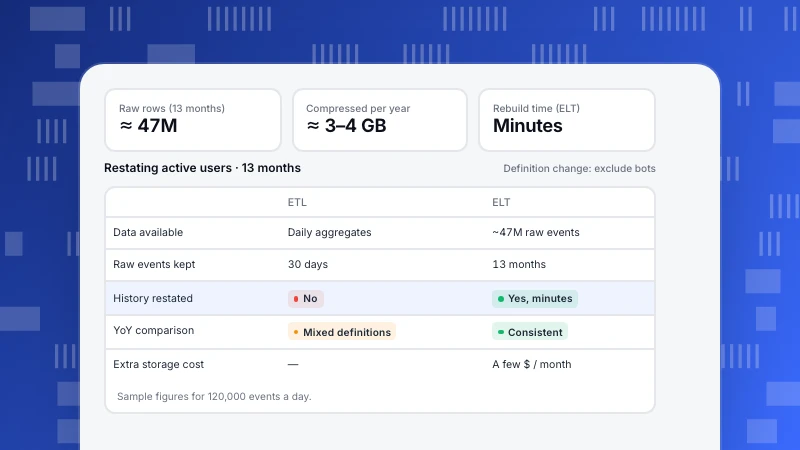
ETL vs ELT: differences, a worked example and how to choose
ETL transforms data before loading; ELT loads raw data and transforms it in the warehouse. A comparison table, a worked example of restating a metric after its definition changes, the privacy catch, EtLT, reverse ETL and a decision checklist.
Read more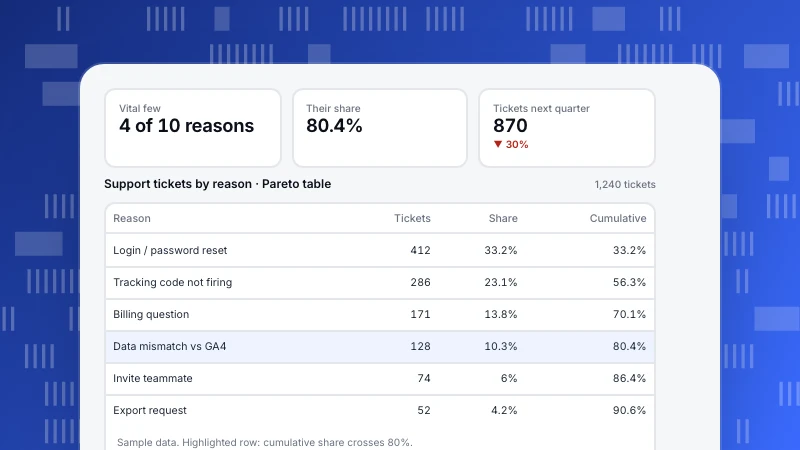
Pareto analysis: how to find the 20% that drives 80% of results
Pareto analysis finds the few causes behind most of an effect. The 8 steps, a support-ticket example where 4 of 10 reasons caused 80% of tickets, a traffic concentration example, analytics use cases and the mistakes that make the 80/20 rule misleading.
Read more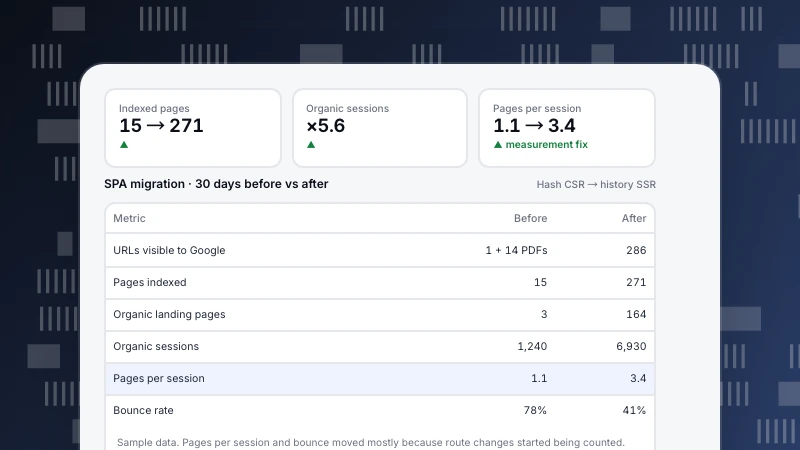
Single-page application SEO: routing, status codes and analytics
Single-page apps need every client-side view to behave like a real page for crawlers and analytics. Seven requirements, history vs hash routing, soft 404 fixes, a migration that grew indexed pages from 15 to 271, and how to count SPA pageviews correctly.
Read more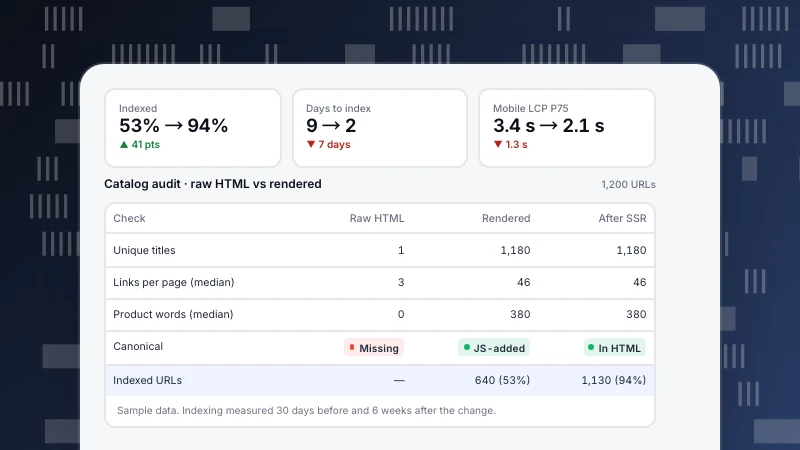
JavaScript SEO: how Google and AI crawlers handle JS, and how to fix it
JavaScript SEO makes sure crawlers can see content that scripts produce. How Google crawls, renders and indexes JS, why most AI crawlers see an empty shell, rendering strategies, common problems and a catalog audit that went from 53% to 94% indexed.
Read more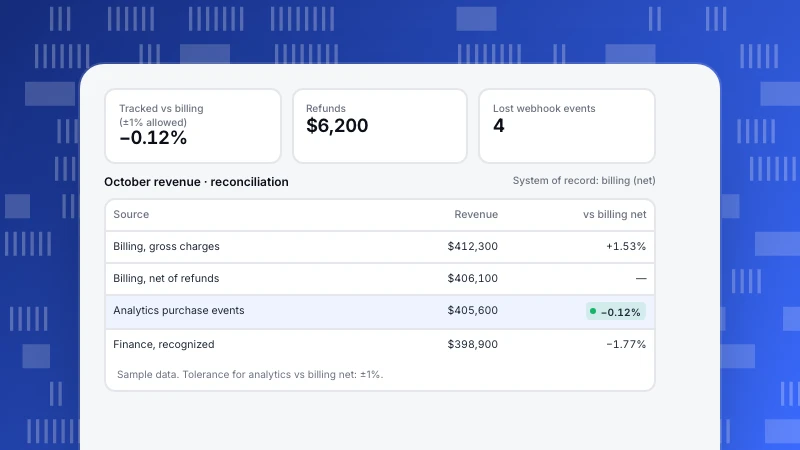
Single source of truth for analytics: definitions, owners and reconciliation
A single source of truth means one agreed value and definition for each important metric. Source vs version of truth, why numbers disagree, a worked example reconciling four October revenue figures, and the steps to make it stick.
Read more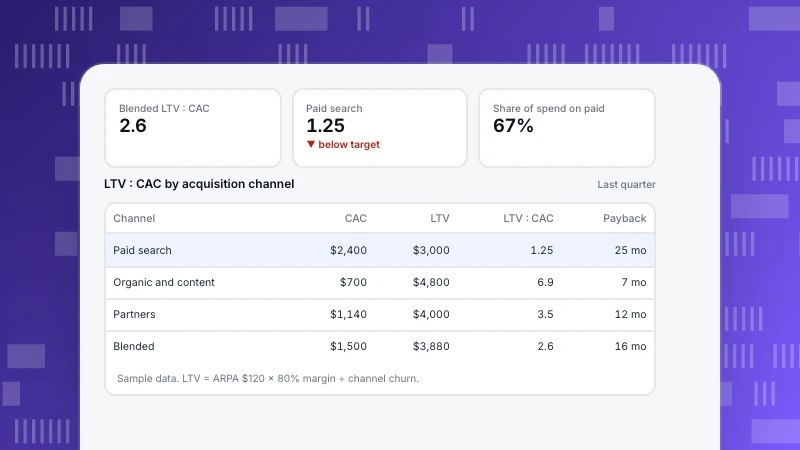
LTV to CAC ratio: how to calculate it, benchmarks and what it hides
The LTV to CAC ratio compares a customer’s lifetime gross profit with the cost of acquiring them. Formulas, a worked example where a healthy blended 2.6 hides a paid channel at 1.25, benchmarks, payback and the mistakes that inflate the ratio.
Read more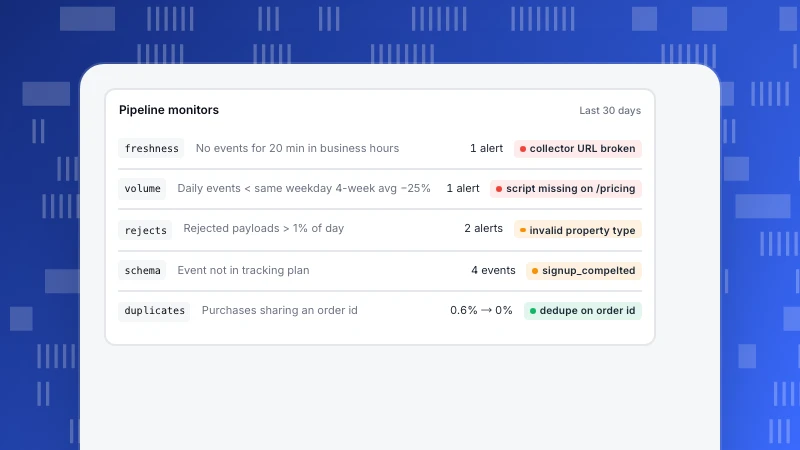
What is a data pipeline? Stages, types and an analytics example
A data pipeline moves data from where it is created to where it is used. The six stages and how each one fails, batch vs streaming, ETL vs ELT, and a worked event-pipeline example with duplicates, late data and the monitors that catch them.
Read more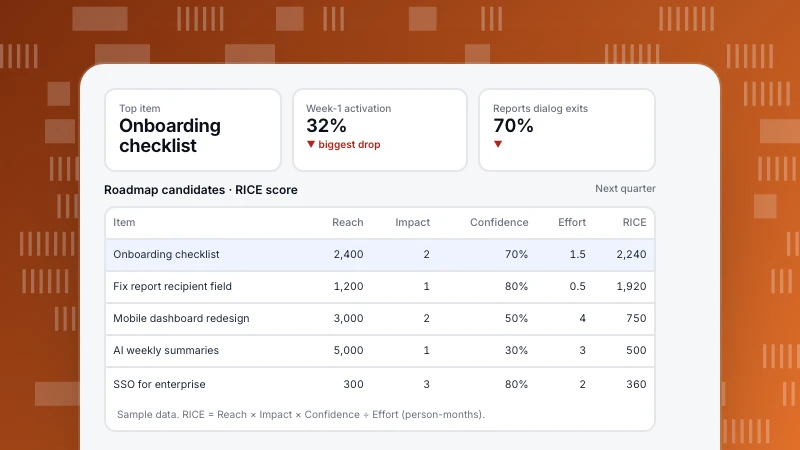
Product roadmap: types, how to build one and how to prioritize with data
A product roadmap links strategy to what gets built next. Four roadmap types compared, an 8-step process, a RICE prioritization example with reach taken from funnel data, and the mistakes that turn roadmaps into feature factories.
Read more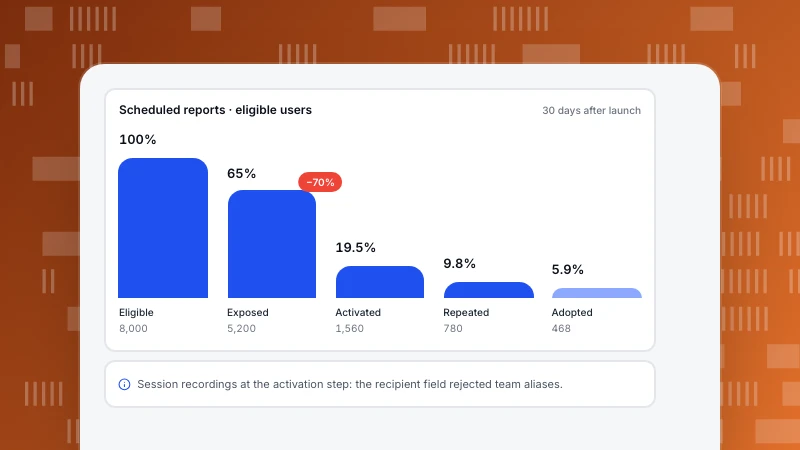
Feature adoption: the funnel, metrics and how to increase it
Feature adoption is whether users find, try and keep using a specific feature. The five-stage funnel, formulas for each metric, a worked example where 19.5% tried a feature but 5.9% adopted it, and tactics that target the real bottleneck.
Read more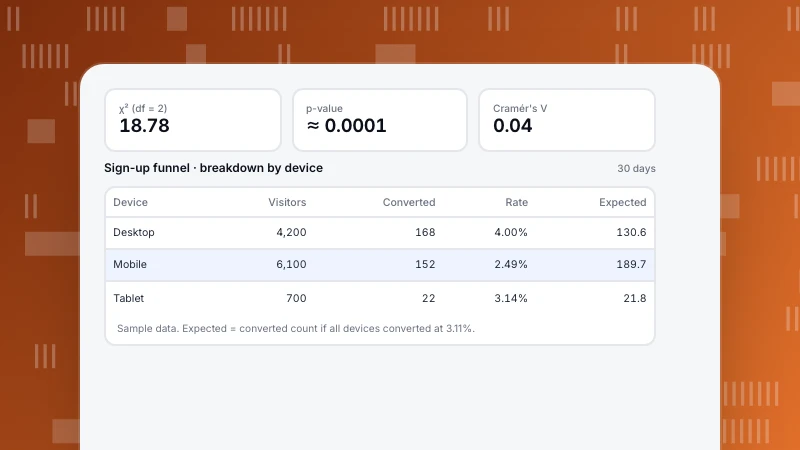
Chi-square test explained with conversion and experiment examples
The chi-square test checks whether category counts differ from chance. Two worked examples, conversion by device and a sample ratio mismatch check, with every expected count, degrees of freedom, effect size and the mistakes to avoid.
Read more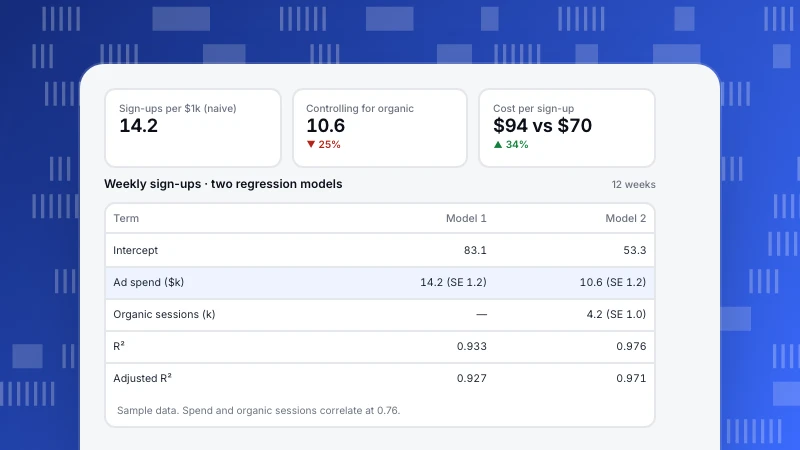
Regression analysis for marketers and analysts: a worked example
Regression analysis estimates how an outcome changes with its drivers. A 12-week example shows how leaving out organic traffic inflated the value of ad spend by a third, plus how to read output, check assumptions and avoid common mistakes.
Read more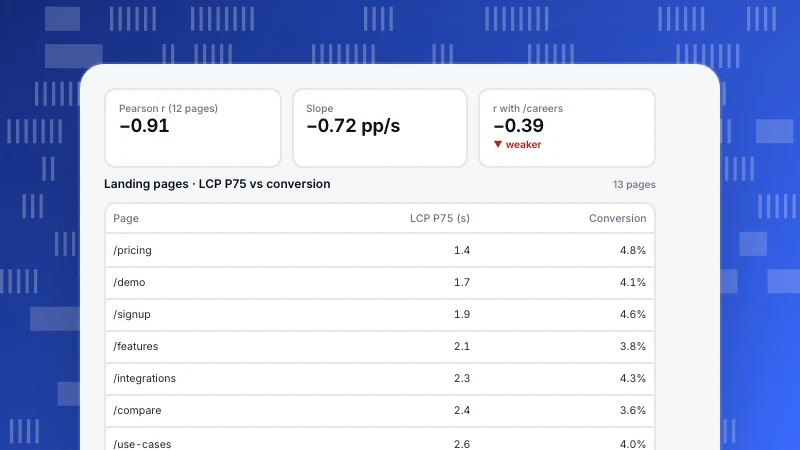
Scatter plots: how to read them, make them and avoid false conclusions
A scatter plot shows how two numeric variables move together. How to read direction, form, strength, outliers and clusters, with a page-speed vs conversion example where one outlier flips the conclusion.
Read more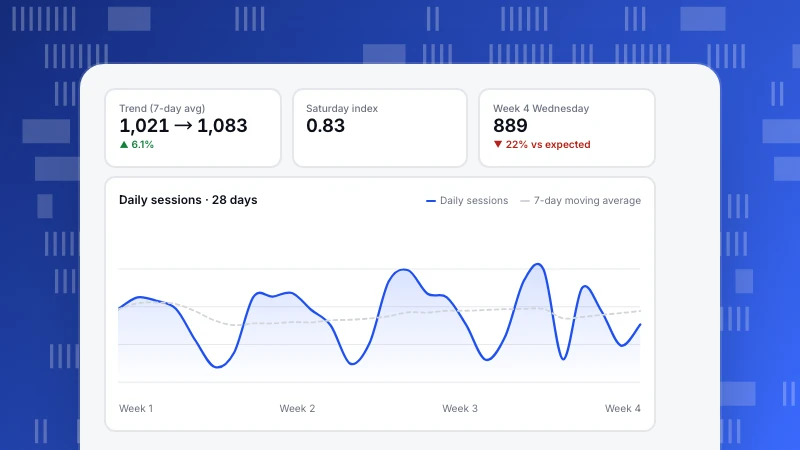
Time series analysis for web analytics: trend, seasonality and anomalies
Time series analysis separates trend, seasonality and noise so you can tell a real change from a Monday. A 4-week worked example, the core techniques, forecasting baselines and the mistakes that mislead dashboards.
Read more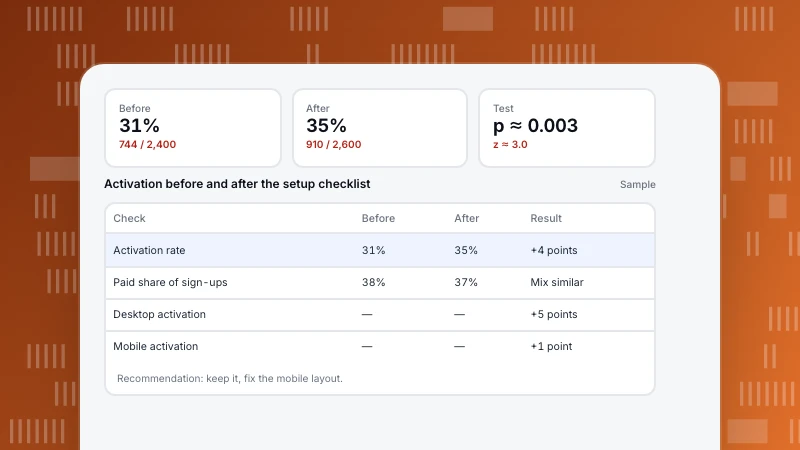
What Does a Product Analyst Do? Tasks, Skills and a Real Example
A product analyst turns product usage data into decisions: defining metrics, setting up tracking, answering questions about features and users, and checking whether changes worked. Five recurring jobs, a typical week, a worked analysis and how the role compares with related jobs.
Read more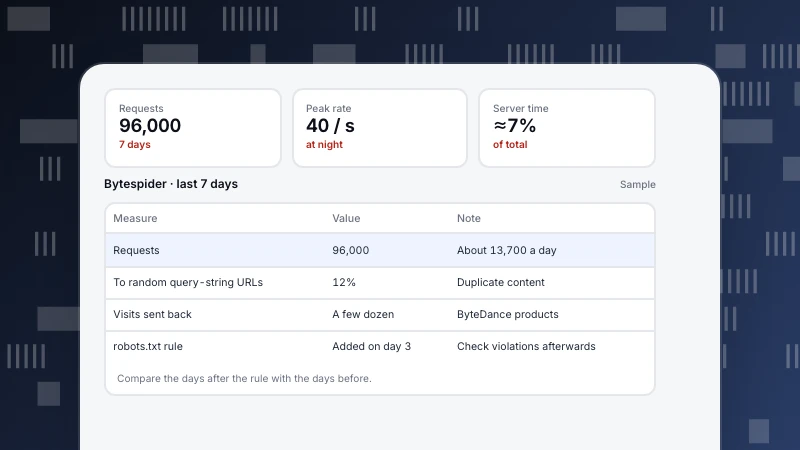
Bytespider: What It Is and How to Control It
Bytespider is the web crawler operated by ByteDance, the company behind TikTok. Site owners often notice it because of its request volume. Its user agent, a worked week measuring its load and robots.txt compliance, and the options from robots.txt to a firewall block.
Read more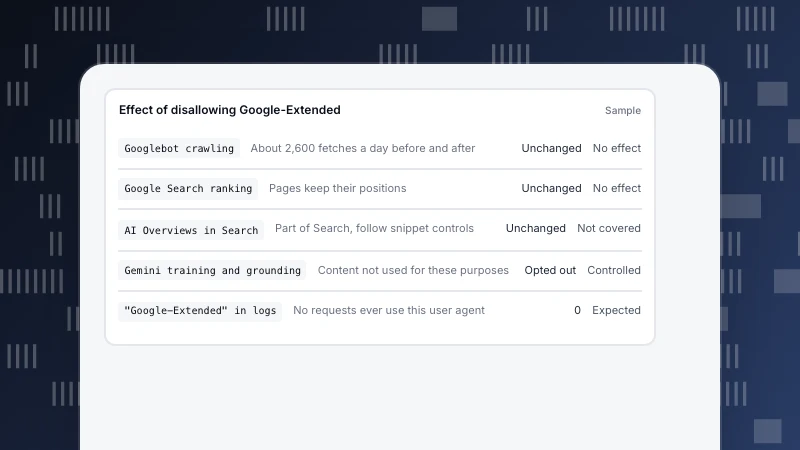
Google-Extended: What It Controls and How to Use It in robots.txt
Google-Extended is a robots.txt token, not a separate crawler. It lets you choose whether content Google crawls may be used for Gemini models and some other AI products, without affecting Google Search. What it controls, what it does not, and how to set it.
Read more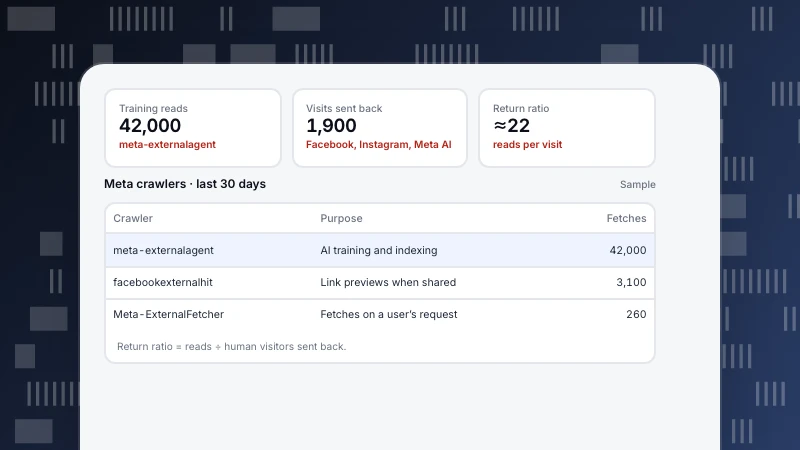
Meta-ExternalAgent: What Meta’s AI Crawler Does and How to Control It
Meta-ExternalAgent is the crawler Meta uses to collect web content for AI training and indexing. How it differs from Meta’s link preview crawler, how to verify it, a worked month comparing what it reads with the visitors Meta sends back, and robots.txt rules.
Read more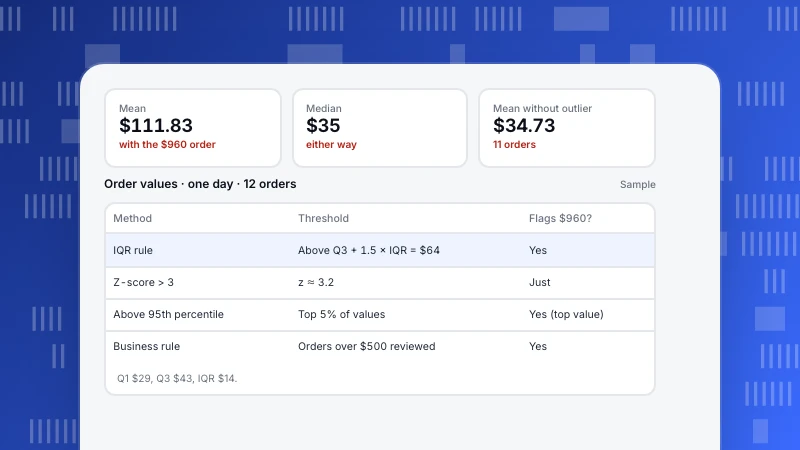
Outliers in Data: How to Find Them and What to Do With Them
An outlier is a value far from the rest of the data. How to find outliers with the IQR rule, z-scores and percentiles, a worked example with 12 orders, and how to decide whether an outlier is an error to remove or a real value to report.
Read more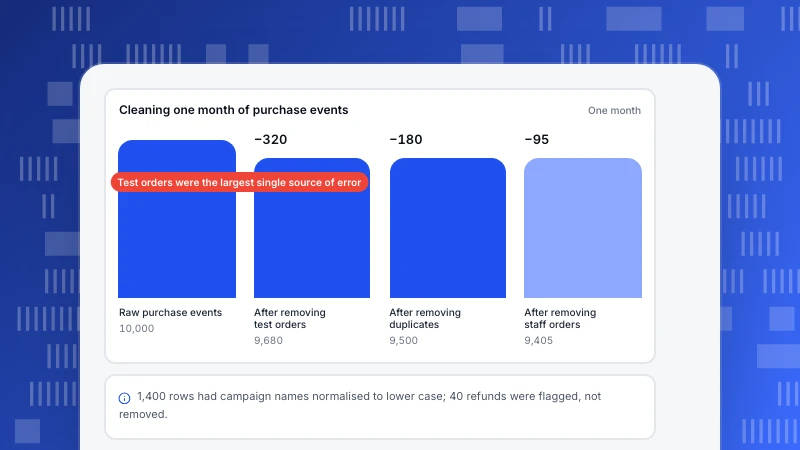
Data Cleaning Techniques for Analytics Data, With a Worked Example
Data cleaning removes or fixes the records that make reports wrong: duplicates, bots, test and internal traffic, inconsistent labels, wrong time zones and outliers. Eight techniques for web and product data, and a worked cleanup of a month of orders.
Read more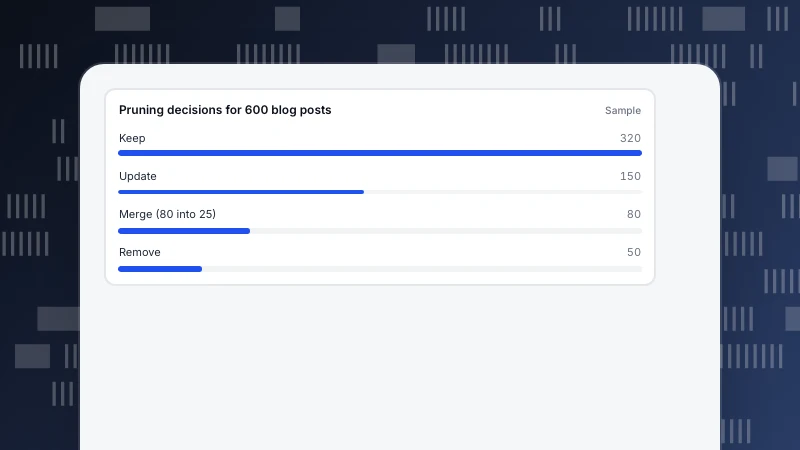
Content Pruning: When to Update, Merge or Remove Old Pages
Content pruning means reviewing old pages and improving, merging or removing the ones that no longer earn their place. Decision rules using traffic, links and conversions, a worked pruning of 600 posts, and how to remove pages without losing value.
Read more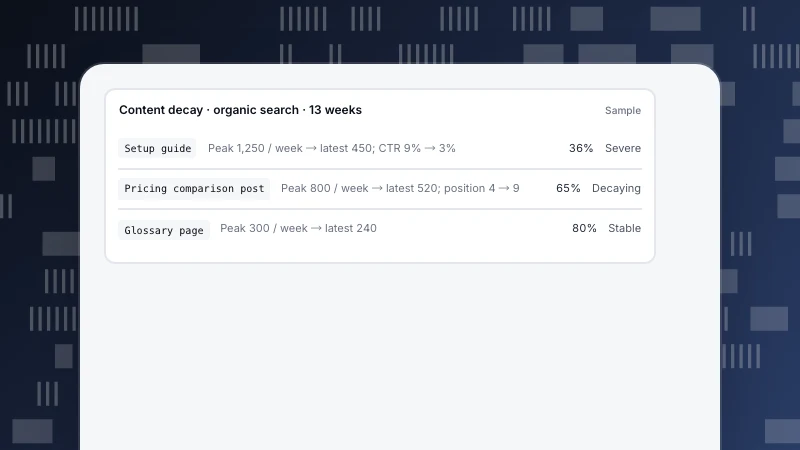
Content Decay: How to Spot It, Diagnose It and Fix It
Content decay is the gradual loss of traffic on pages that used to perform. How to define it with numbers, rule out seasonality and site-wide drops, diagnose by impressions, position and CTR, and choose between refresh, merge and leave alone.
Read more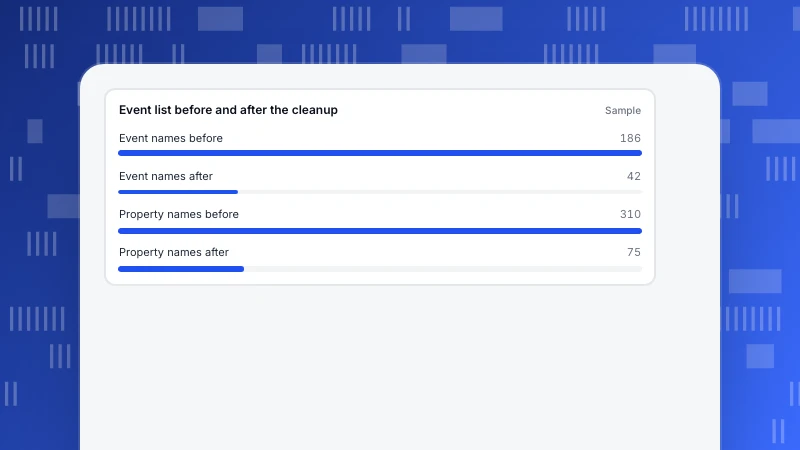
Data Taxonomy for Analytics: Naming Rules and a Cleanup Example
A data taxonomy is the agreed structure and naming of your events, properties and values, so everyone counts the same thing the same way. The four layers, naming rules with examples, a worked cleanup from 186 event names to 42, and how to keep it from drifting.
Read more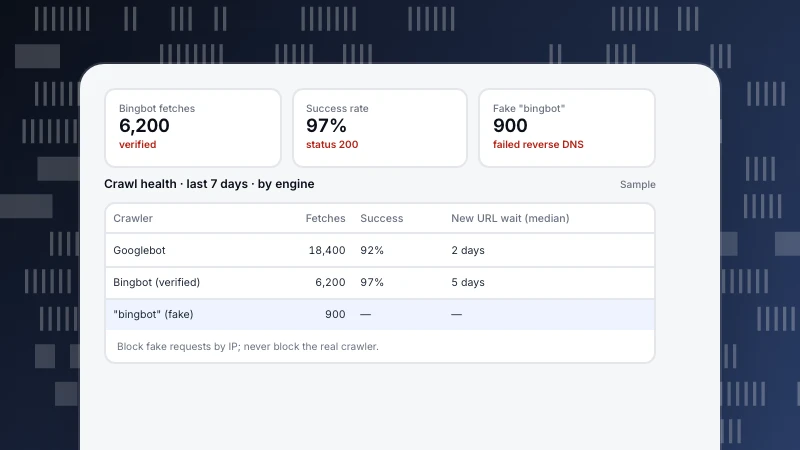
Bingbot: What It Is, How to Verify It and Control Its Crawling
Bingbot is Microsoft’s web crawler for Bing search. Its user agents, how to verify real Bingbot by reverse DNS, a worked week comparing it with Googlebot (with fake Bingbot traffic), how to control its crawl rate and how IndexNow speeds up discovery.
Read more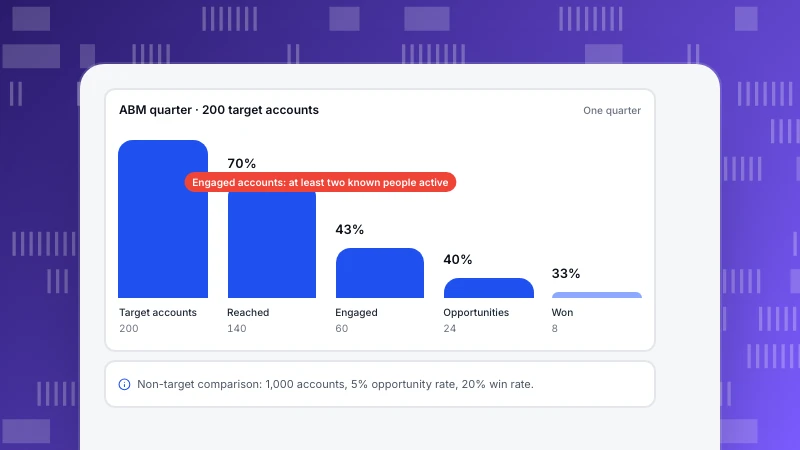
Account-Based Marketing Analytics: Metrics That Show ABM Works
Account-based marketing is judged by accounts, not leads. The metrics for each stage, a worked quarter comparing 200 target accounts with non-target accounts, why you need a comparison group, and what you can measure before people sign in.
Read more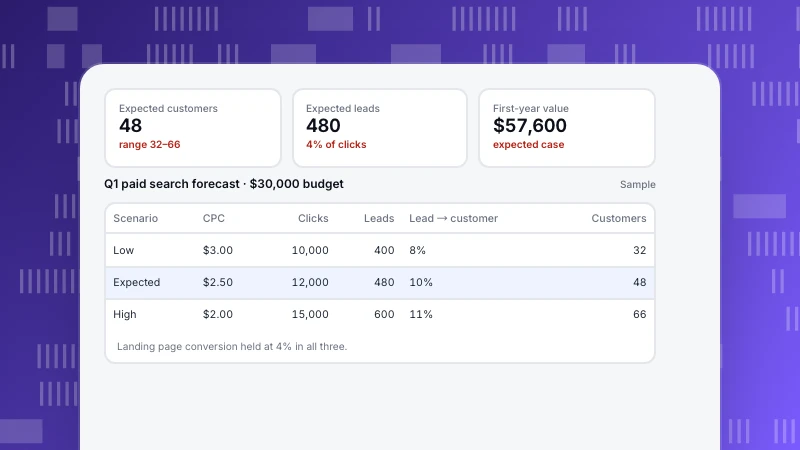
Marketing Forecasting: Methods and a Worked Quarterly Forecast
Marketing forecasting estimates the traffic, leads, customers and revenue your marketing will produce. Four methods, a worked funnel-based forecast with low, expected and high scenarios, and how to compare forecast with actuals every month.
Read more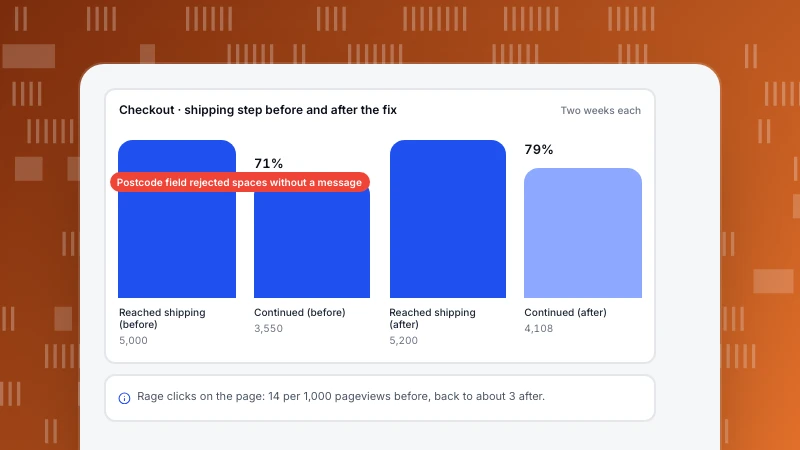
Digital Experience Analytics: What It Covers and How to Use It
Digital experience analytics (DXA) shows how people actually experience your site or app: where they click, scroll, get stuck and give up. The five parts, a worked checkout investigation from funnel drop to fix, and privacy rules for session replay.
Read more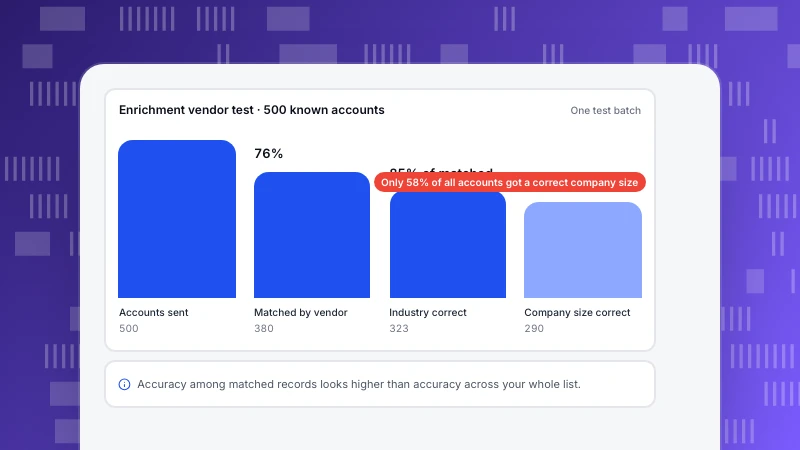
Third-Party Data: What It Is, When It Helps and How to Test It
Third-party data is collected by a company with no direct relationship to the people it describes, then sold or shared. How it differs from first- and second-party data, where it still helps, its risks, and how to test a vendor’s accuracy before you rely on it.
Read more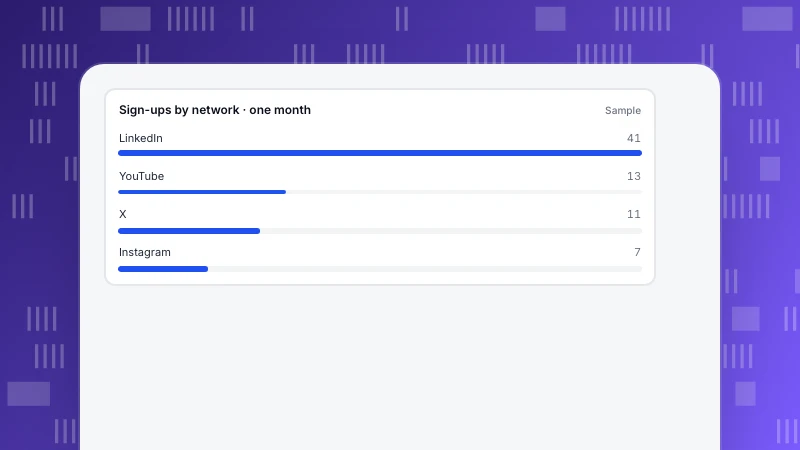
Social Media Analytics Dashboard: What to Include and How to Read It
A useful social media dashboard connects platform numbers (reach, engagement) with what those visitors do on your site (sessions, sign-ups, sales). What to include, a layout, a worked month across four networks, and why platform clicks never equal sessions.
Read more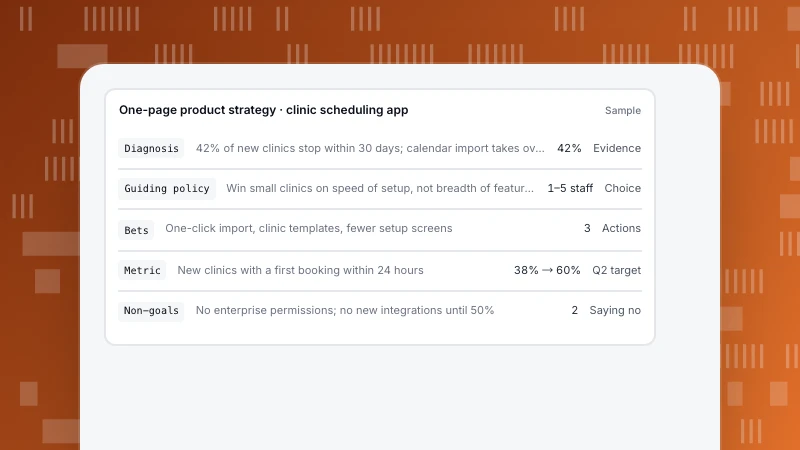
Product Strategy Framework: A One-Page Template With an Example
A product strategy explains where you will win and what you will not do. Five well-known frameworks compared, a one-page template (diagnosis, guiding policy, bets, metric, non-goals), and a filled-in example you can copy.
Read moreFive categories, one question each
Each category answers a recurring question we hear from customers. Start with the one closest to your job.
Analytics
Definitions, funnels, retention and the data-quality questions behind every number.
87 articlesGrowth & Marketing
Acquisition, marketing, site and app operations, and how to pick the one stage worth fixing first.
69 articlesLive Chat
Proactive invites, translation and turning support conversations into conversions.
10 articlesAI Search
GPTBot, ClaudeBot, PerplexityBot: who fetches your pages, what the files say and what comes back.
32 articlesProduct News
What shipped, why we built it that way, and how to turn it on.
32 articles