Blog Analytics, growth and chat, explained with real numbers · Page 5
Practical notes from the team building TapCub: how metrics are defined, where funnels break, what AI crawlers take from your site, and how support teams turn conversations into conversions.
Browse every article
Filter by category or search a keyword. Every article links to the report or setting it talks about.
230 articles · page 5 of 5
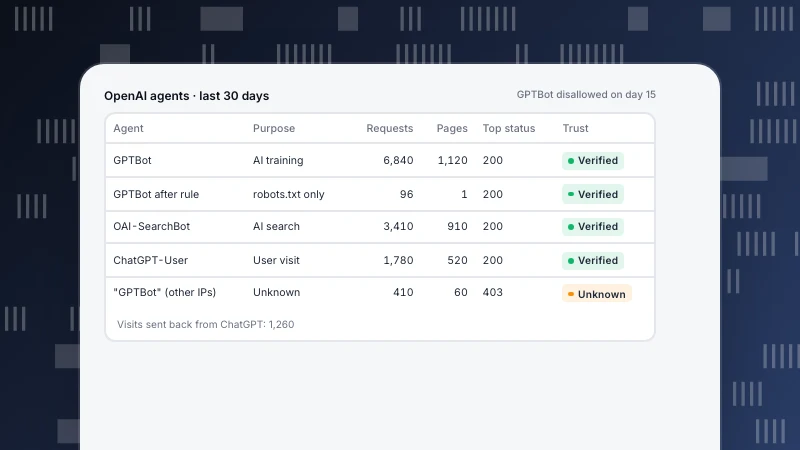
GPTBot: OpenAI's Four Crawlers and How to Control Each One
GPTBot is OpenAI's training crawler, one of four OpenAI agents with independent robots.txt settings. What each does, what opting out changes, rules for common goals, and how to verify and check them in your own data.
Read more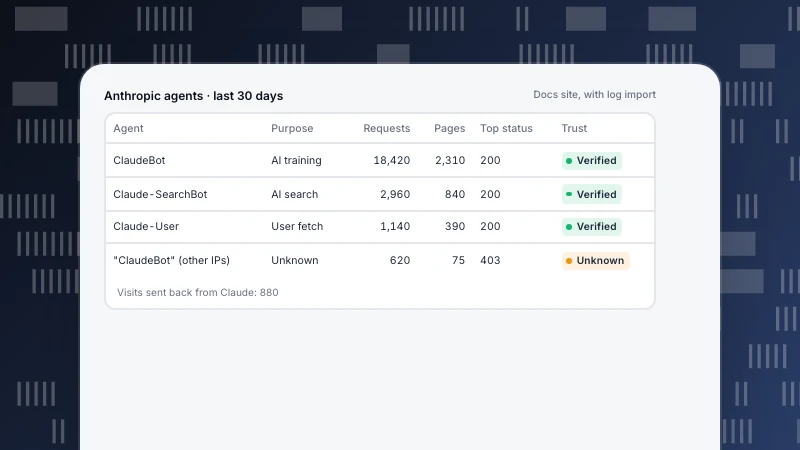
ClaudeBot: What It Crawls, How to Block It and How to Verify It
ClaudeBot is one of three Anthropic web agents. What each one does, what blocking it changes, robots.txt rules for common goals, how to verify requests against Anthropic's published IP list, and how to see ClaudeBot in your own data.
Read more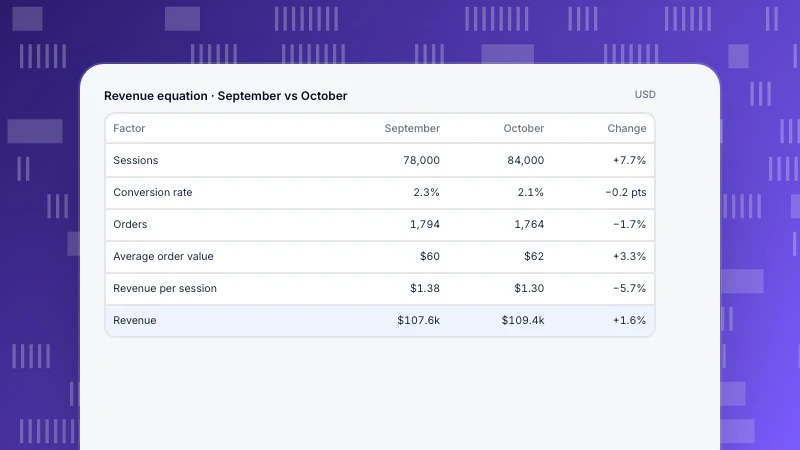
Ecommerce KPIs: One Revenue Equation and What Moved It
Ecommerce KPIs organised around one equation: revenue = sessions × conversion rate × average order value. Compare months factor by factor, add repeat purchase and refunds, and know where each number comes from.
Read more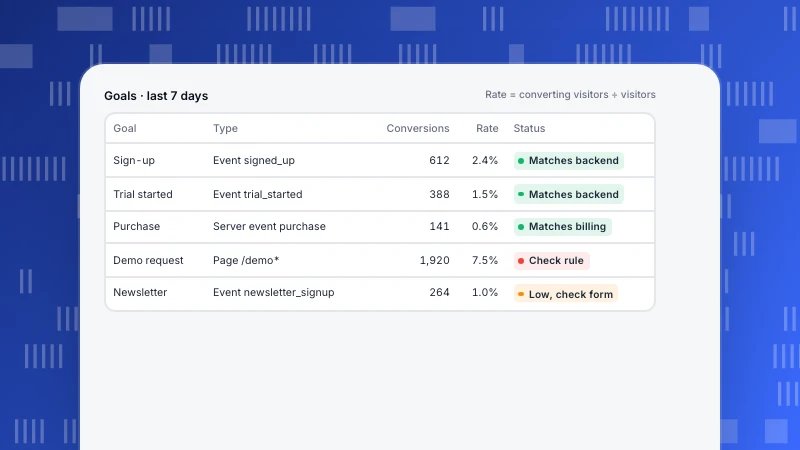
Conversion Tracking: Set It Up on Your Site and Count Each Once
Conversion tracking on your own site: decide what counts, record each conversion as a page goal, client event or server event, keep it from being counted twice, verify it, and keep it apart from ad-platform tags.
Read more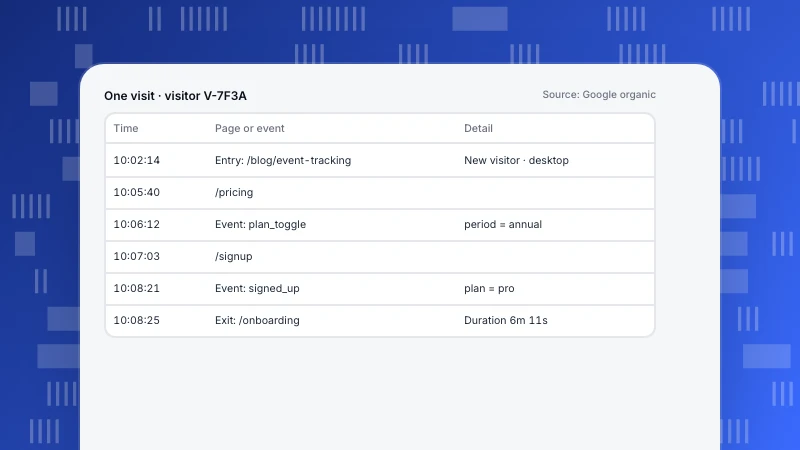
Website Visitor Tracking: Four Layers and What Each Can See
Website visitor tracking in four layers: aggregate counts, sessions and paths, identified users after login, and company identification. What each layer sees, what it needs, and where privacy changes what you should collect.
Read more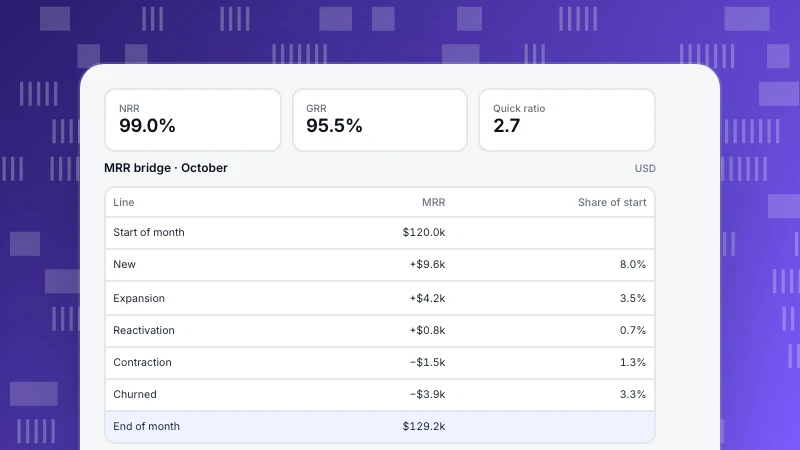
SaaS Metrics: One MRR Bridge and the Ratios Built on It
SaaS metrics tied together by one MRR bridge: new, expansion, reactivation, contraction and churned MRR, with NRR, GRR, quick ratio and CAC payback computed from it, and the product signals that lead each line.
Read more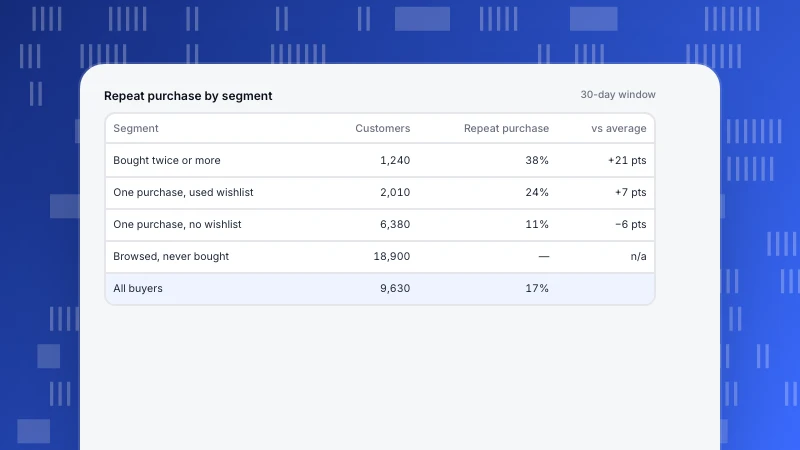
Customer Segmentation Analysis: Five Steps from Question to Action
Customer segmentation analysis in five steps: start from a decision, choose variables you can observe, compare segments on the same KPI, check size and stability, then act and measure again.
Read more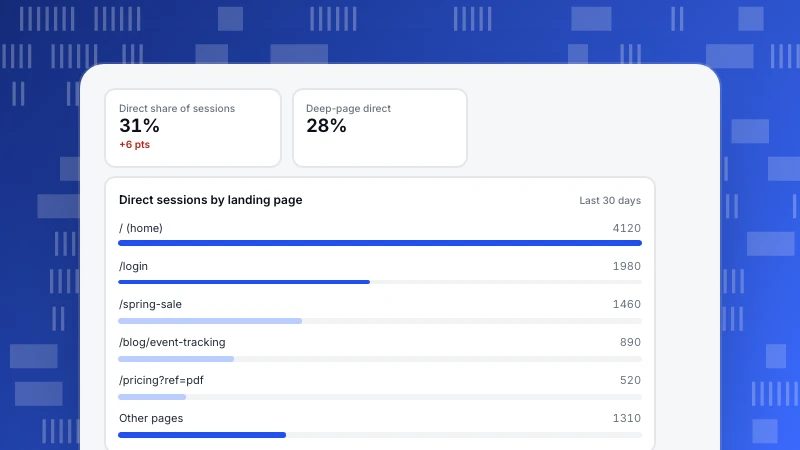
Direct Traffic: What Ends Up in It and How to Shrink It
Direct traffic is where visits land when the source is lost. Read the landing pages inside it to separate real direct visits from untagged email, apps and stripped referrers, then fix each cause.
Read more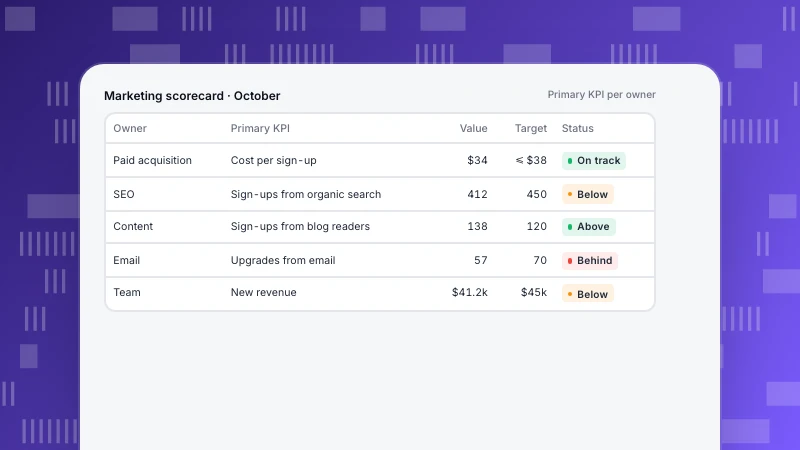
Marketing KPIs: Build a Tree from Revenue Down to Each Channel
Marketing KPIs organised as a tree from revenue down to channel inputs, with one primary KPI per channel owner, platform numbers kept apart from outcomes measured on your site, and a review cadence.
Read more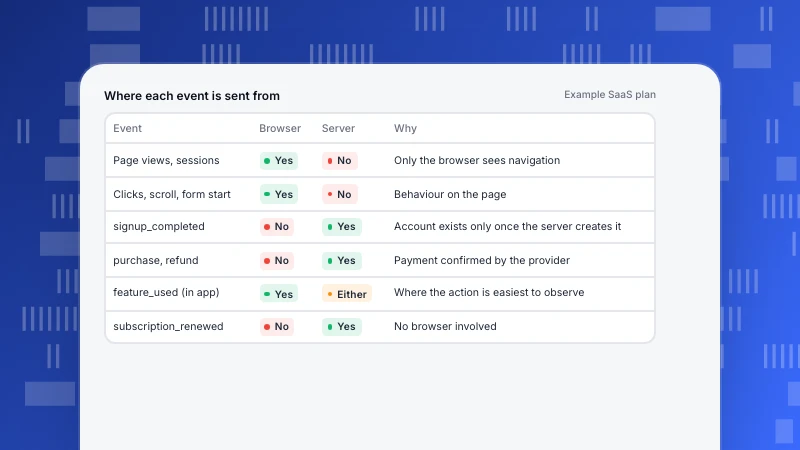
Server-Side Tracking: What to Send from the Server, and What Not
What server-side tracking is good for and what it is not, how to split events between browser and server, and how to keep sessions and attribution connected without double counting.
Read more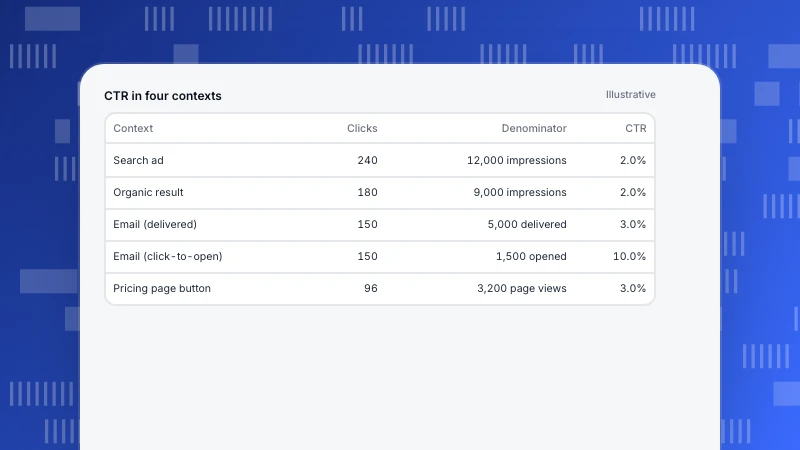
How to Calculate CTR: One Formula, Four Different Denominators
How to calculate click-through rate for ads, search results, emails and on-site buttons, with worked examples, the denominator each one uses, CTR vs conversion rate, and what inflates the number.
Read more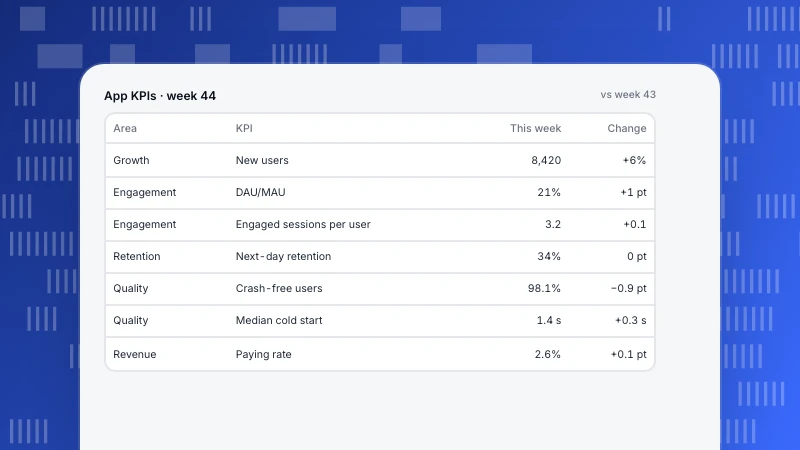
Mobile App KPIs: A Short List with Exact Counting Rules
Mobile app KPIs grouped into growth, engagement, retention, quality and revenue, with the counting rules that change the numbers and how to read them by app version and install channel.
Read more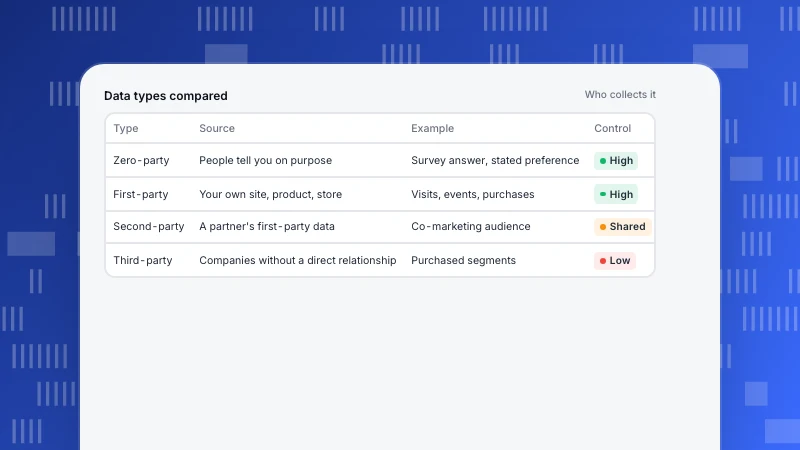
First-Party Data Strategy: Collect for Decisions, Keep Less
A practical first-party data strategy: what counts as zero-, first-, second- and third-party data, how to plan collection around decisions, identity and consent choices, and minimisation and retention defaults.
Read more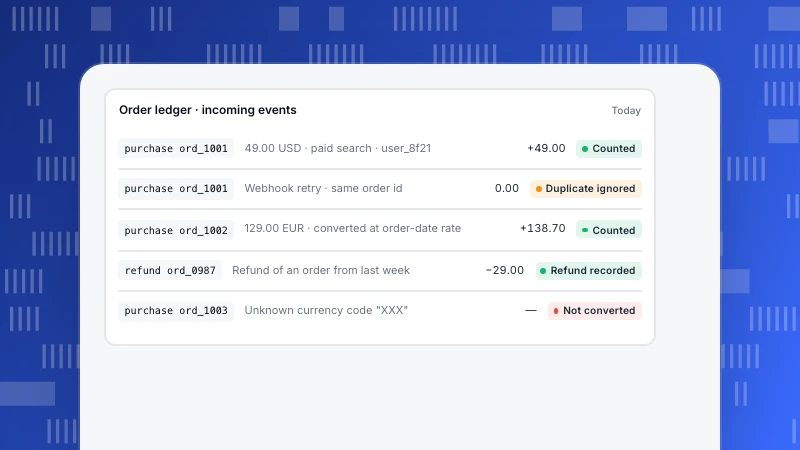
Revenue Tracking with Events: Purchases, Refunds and the Metrics They Feed
How to track revenue in analytics with events: which purchase and refund events to send, from where, the properties that matter, deduplication and currency, and the revenue metrics you get from them.
Read more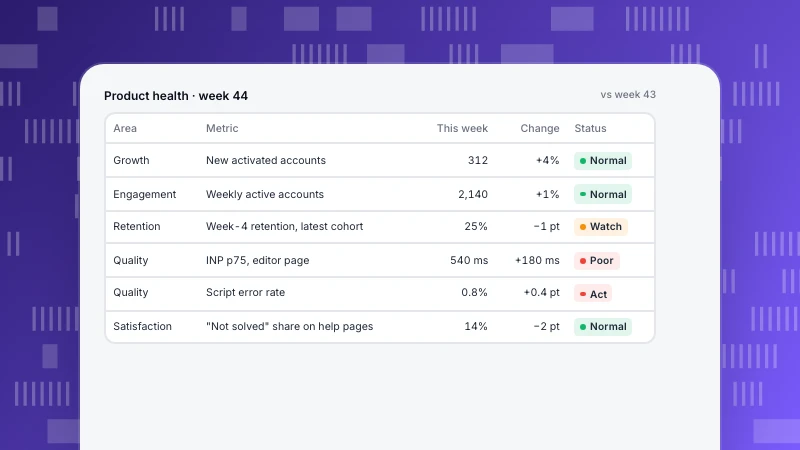
Product Health Metrics: A Weekly Scorecard That Includes Quality
Product health metrics in five areas (growth, engagement, retention, quality, satisfaction) on one weekly scorecard, with thresholds that turn a number amber or red and a routine for reviewing it.
Read more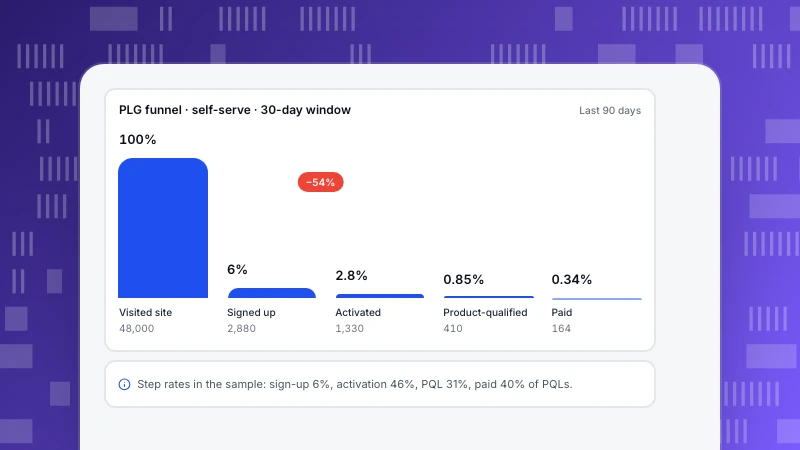
Product-Led Growth Metrics: One Funnel from Visitor to Expansion
PLG metrics as one connected funnel from visitor to expansion: the event behind each metric, how to define a product-qualified lead from usage, and how to measure team products by account.
Read more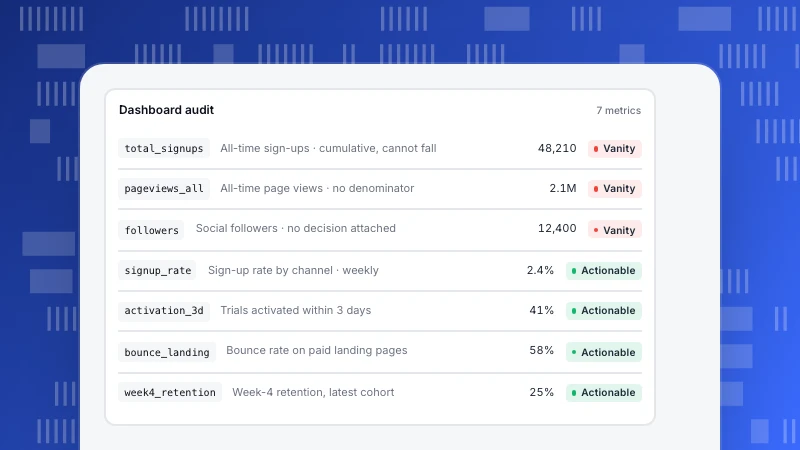
Actionable Metrics: A Test, Rewrites and Decision Rules
How to tell an actionable metric from a vanity metric with five questions, rewrites of common vanity metrics, and the decision-rule format that turns a dashboard number into an action.
Read more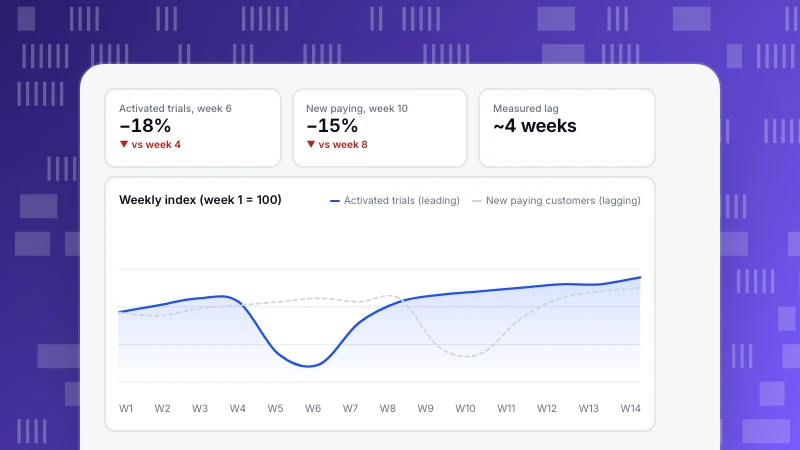
Leading vs Lagging Indicators for Product and Growth Teams
Leading vs lagging indicators with product and website examples by funnel stage, a method to find and validate a leading indicator in your own data, and how to alert on it.
Read more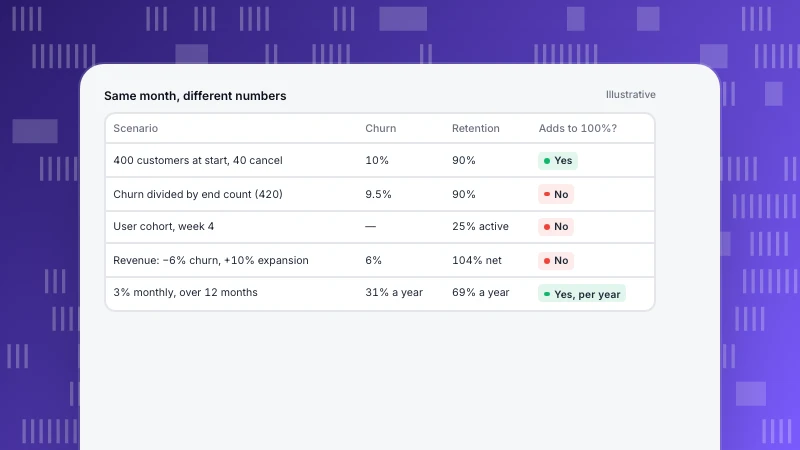
Churn Rate vs Retention Rate: When They Add Up and When They Do Not
Churn and retention look like two sides of one number, but they only add up to 100% in one case. Worked scenarios for customers, revenue and user cohorts, plus net revenue retention and annual churn.
Read more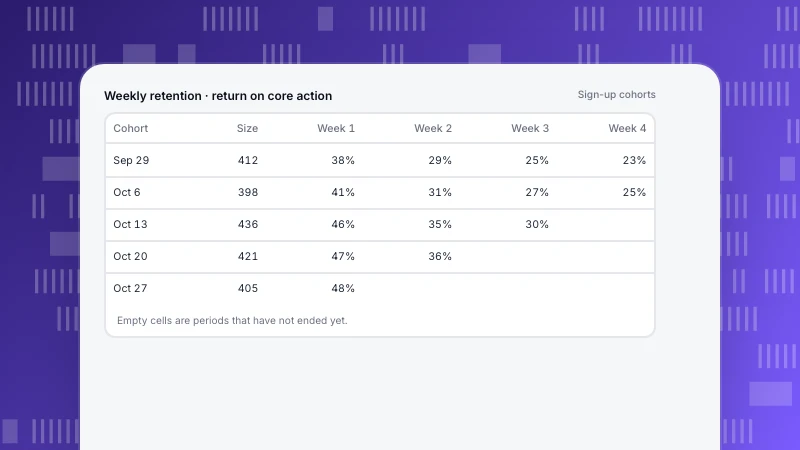
Retention Metrics: Which Rate to Use and How to Calculate It
The retention metrics that actually differ, how to calculate retention rate with a worked example, the counting choices that change the number, and which metric fits which business.
Read more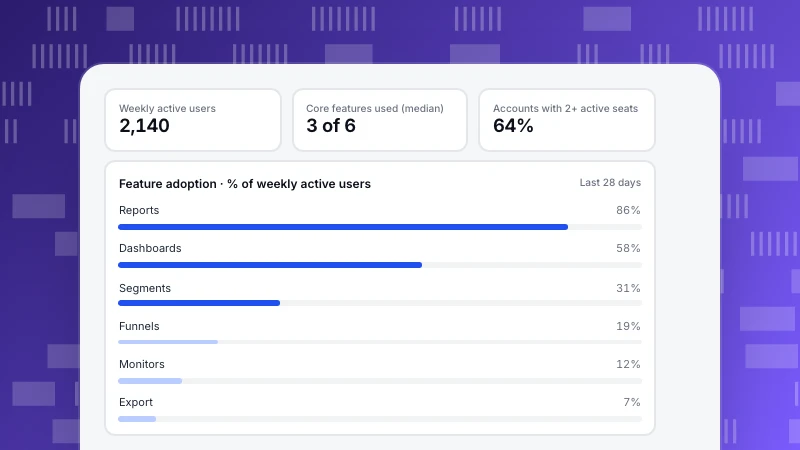
How to Measure Product Adoption, Feature by Feature
How to measure product adoption with events: how it differs from activation, the four dimensions of feature adoption, choosing the right denominator, and account-level adoption for B2B products.
Read more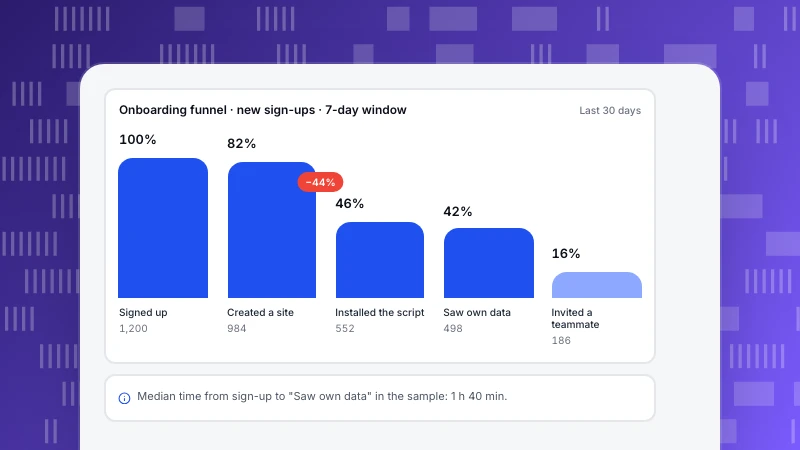
User Onboarding Metrics: Activation, Time to Value and the Funnel
Onboarding metrics for software products: how to define activation and test it, build the onboarding funnel from events, measure time to value, and tie onboarding to retention.
Read more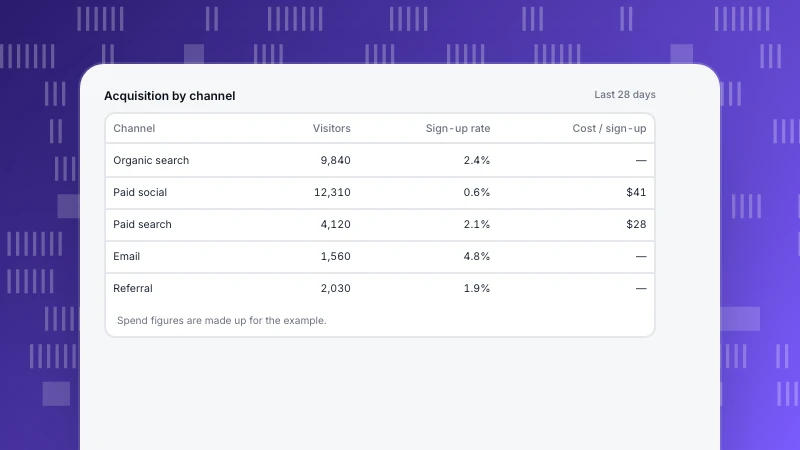
Acquisition Metrics: How to Measure Each Channel, Not Just Traffic
Acquisition metrics in three layers (volume, quality, cost), measured per channel and joined to sign-ups and revenue, plus why channel numbers never agree between tools.
Read more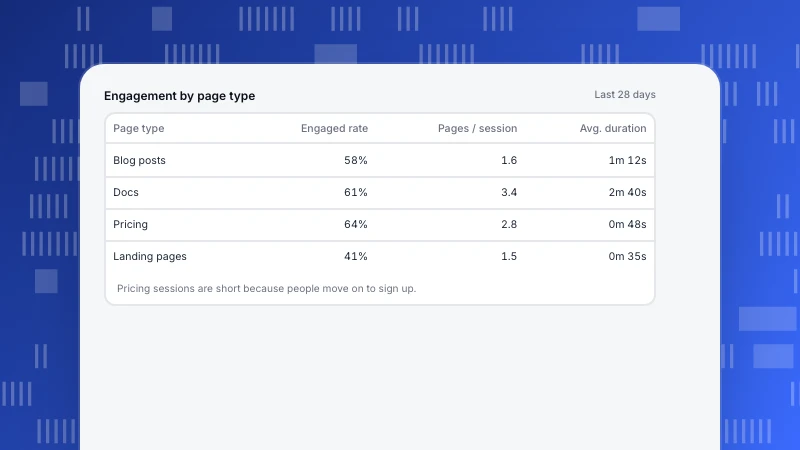
Engagement Metrics: What to Measure on a Site and in a Product
Engagement metrics for websites and products with formulas and blind spots, how engaged sessions are counted, and how to raise user engagement without gaming the number.
Read more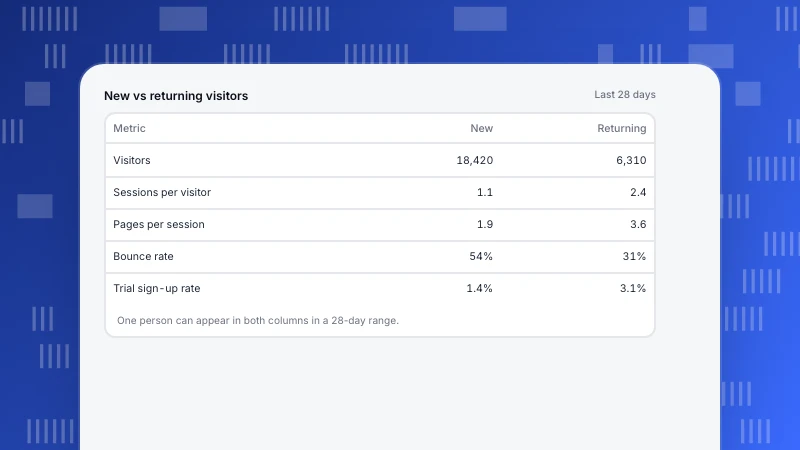
New vs Returning Users: What the Split Means and Why It Lies
How analytics tools decide whether a visitor is new or returning, why the two groups never add up to the total, what makes returning people look new, and how to use the split.
Read more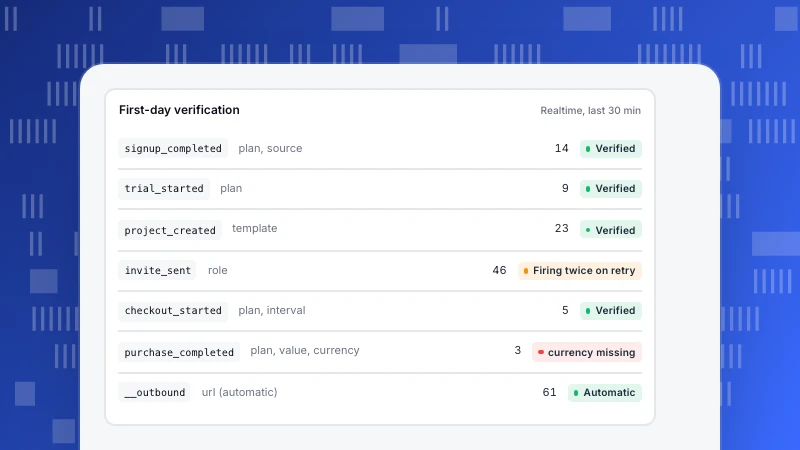
Event Tracking: How to Set It Up in 5 Steps
Event tracking records the actions a pageview misses: sign-ups, clicks, purchases. A five-step setup with a starter event plan, naming rules, code, automatic events and a verification checklist.
Read more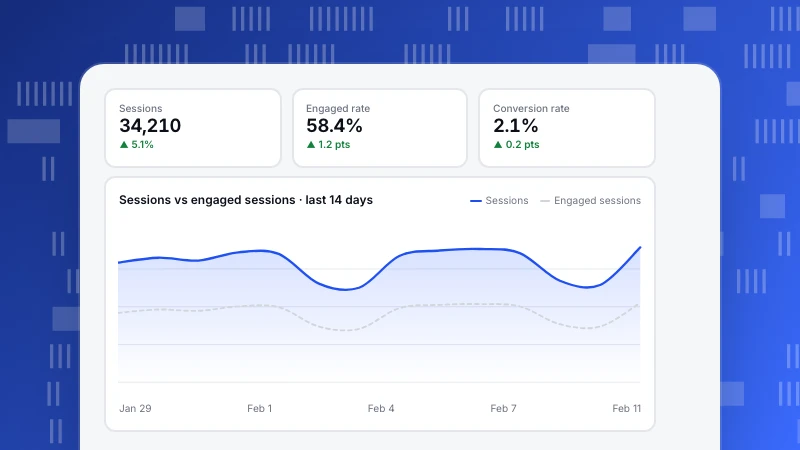
Analytics Metrics: 12 Website Metrics, Formulas and Traps
The 12 website analytics metrics worth reporting, grouped into traffic, engagement, conversion and quality, each with its formula, what it tells you and the trap that makes it misleading.
Read more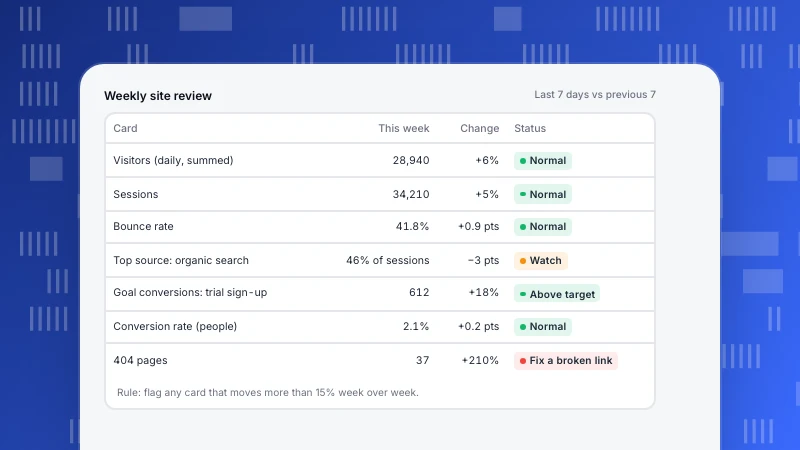
Analytics Dashboard: What to Put on It, by Role (Template)
An analytics dashboard should answer one person's recurring question on one screen. Layouts by role, a weekly website template, six build steps and the mistakes that make dashboards lie.
Read more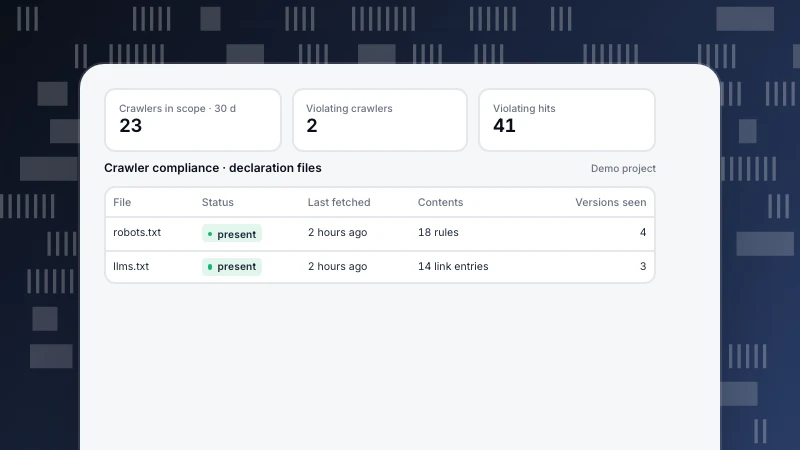
llms.txt: what to write, an example, and how to check whether anyone reads it
What llms.txt is and is not, the structure the proposal defines, a real example, how it should agree with robots.txt, and how to check in your server logs whether AI agents fetch it.
Read more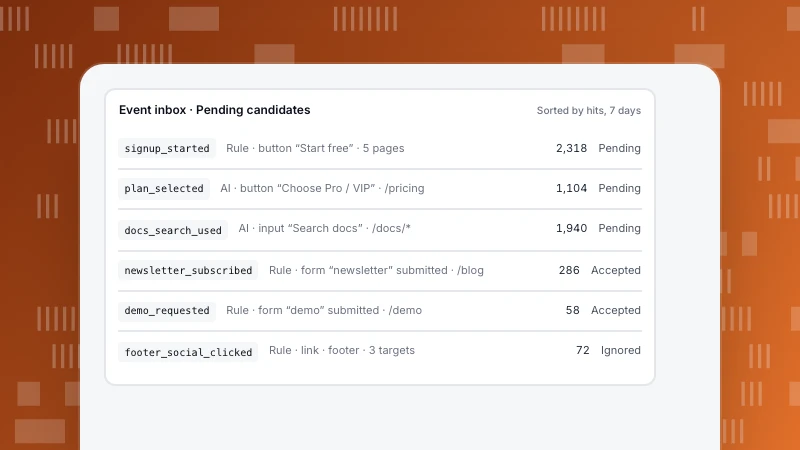
Event naming conventions: rules, mistakes, and how the event inbox drafts names
A practical event naming convention (object_action, snake_case, past tense), the mistakes that break it, and how TapCub’s event inbox turns autocaptured clicks into named events you accept, merge or ignore.
Read more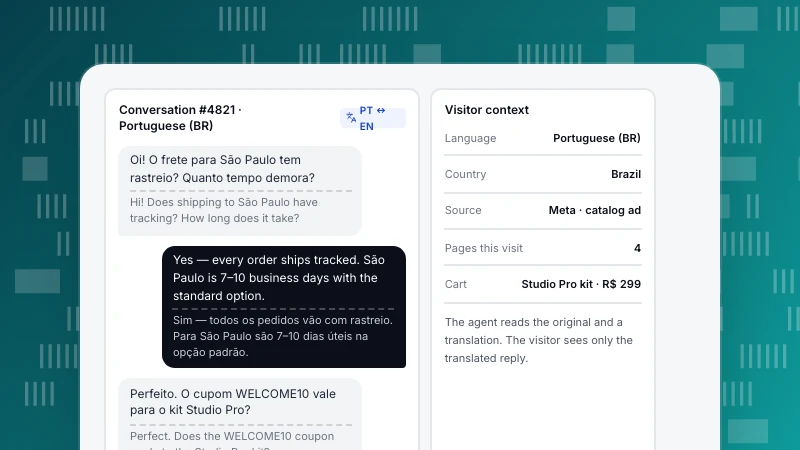
Cross-border customer support in chat: translation, hours and what to write yourself
How two-way translation works in live chat, what it does not translate, how to cover hours and assignment, and how to tell whether cross-border conversations actually improved.
Read more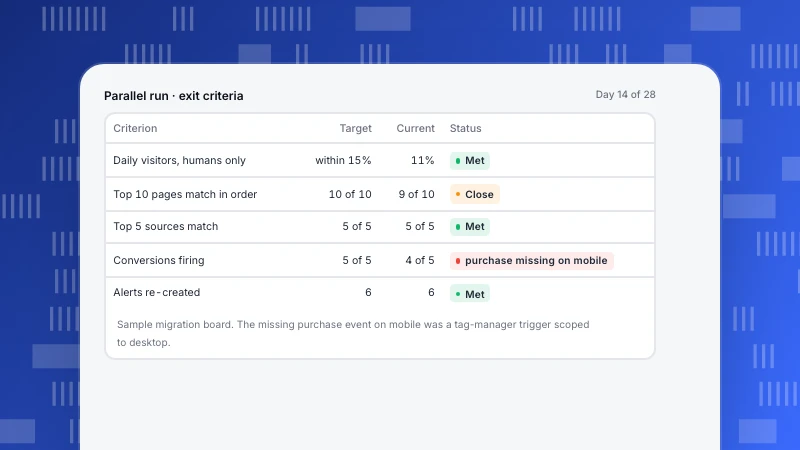
How to migrate from Google Analytics 4: an 8-step checklist
Migrations fail on definitions, not on snippets. Eight checks in order, from the event inventory and metric mapping to the parallel run, history export and the day you remove the old tag.
Read more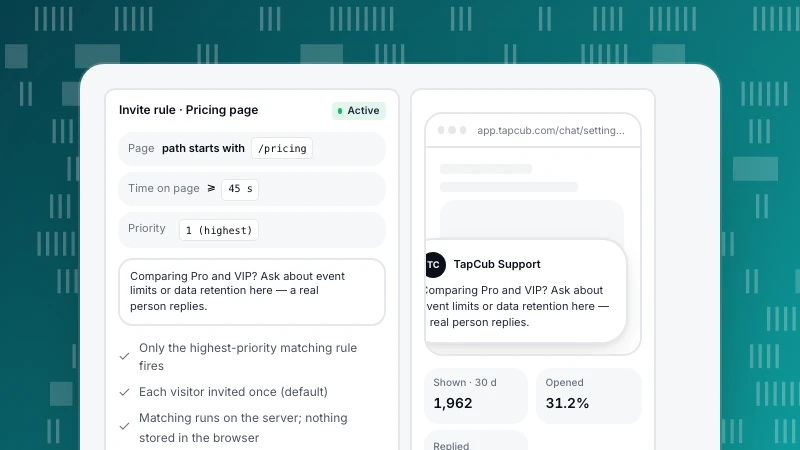
Proactive chat best practices: triggers, copy and limits that don't annoy
Proactive chat works when it arrives at the moment of a real question. Triggers, invite copy, frequency limits, staffing and how to measure whether invites lift conversion.
Read more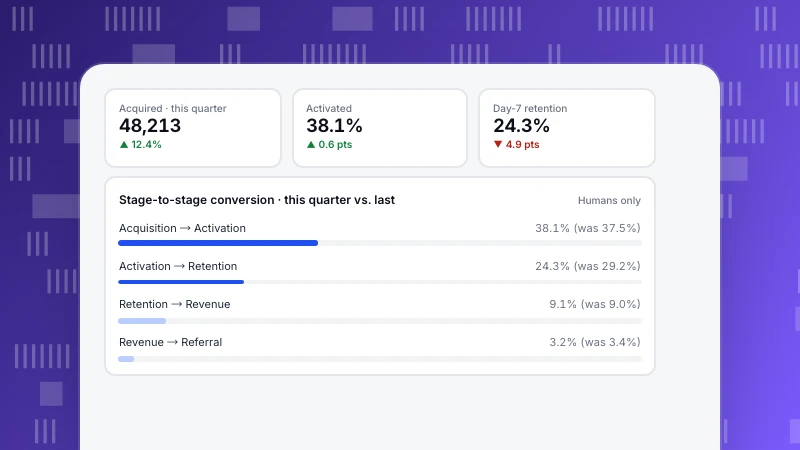
AARRR metrics: what to measure at each stage, and which stage to fix first
AARRR metrics for every stage with formulas, a worked example in people, examples for SaaS, stores and content sites, and how to pick the one stage worth fixing first.
Read more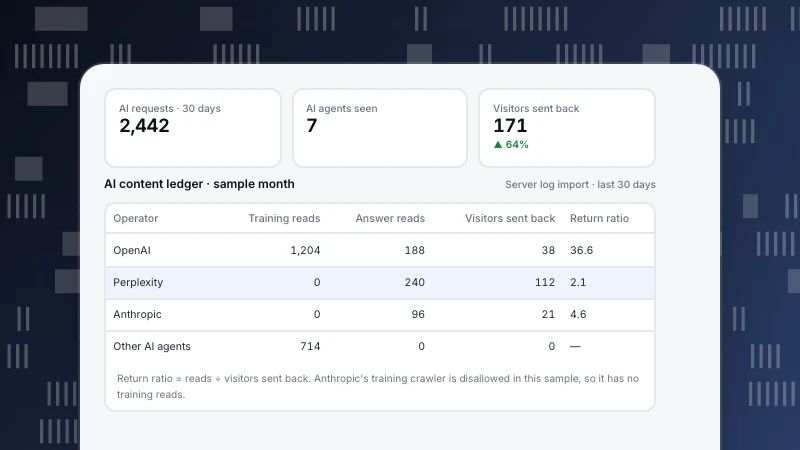
How to block AI crawlers: user agents, robots.txt rules and how to check them
GPTBot, ClaudeBot, Google-Extended and the rest do different jobs. Which AI crawlers to block, the robots.txt rules to use, what to enforce at the server, and how to check it worked.
Read more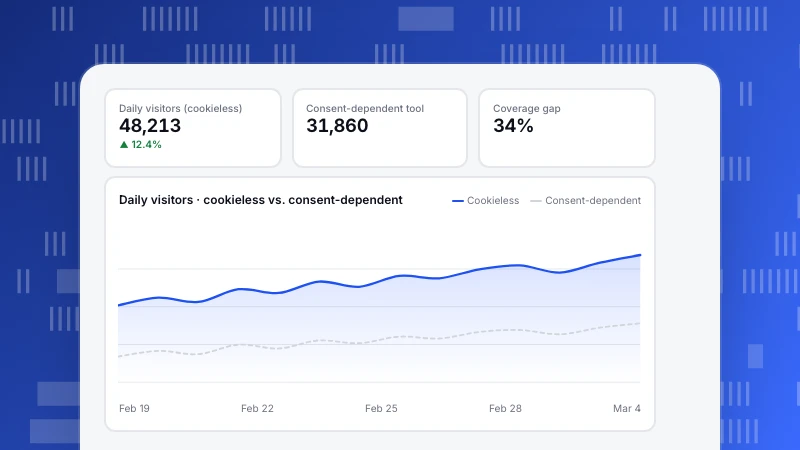
Cookieless vs cookie-based analytics: accuracy, consent and what changes
Cookieless vs cookie-based analytics compared: how each counts visitors, where each goes wrong, what the law says about consent, and what to check when you switch.
Read more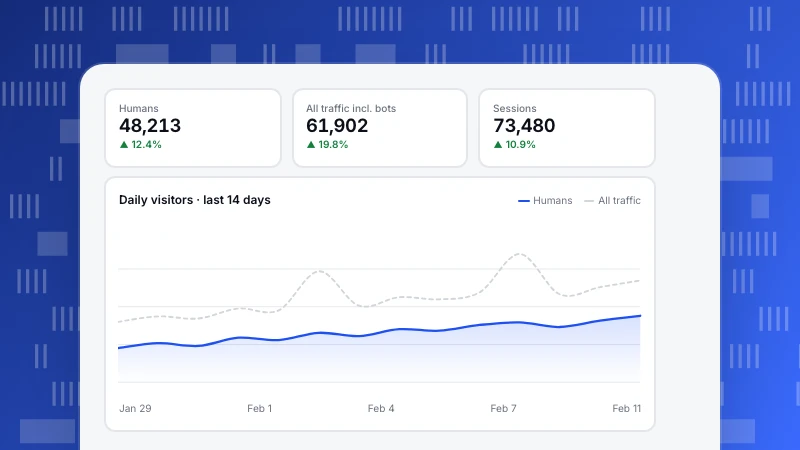
Why analytics tools show different numbers: 8 causes and a reconciliation checklist
Two analytics tools on one site never print the same visitor count. Here are the eight causes, a worked example of where the gap goes, and a checklist to reconcile them.
Read more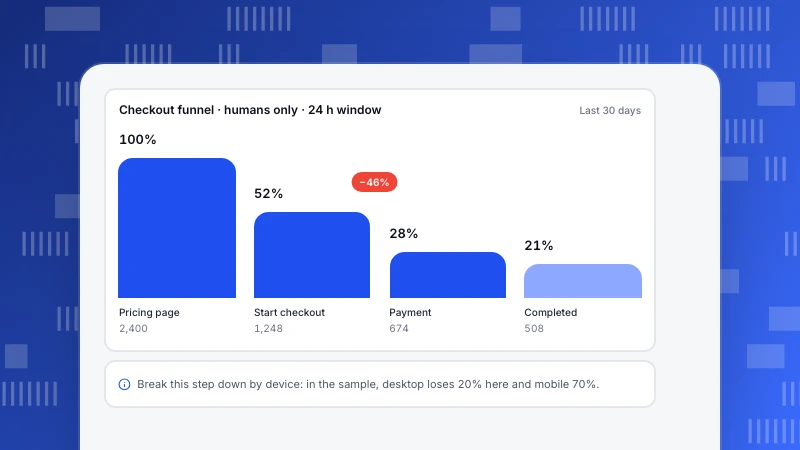
Conversion funnel optimization: find the step that matters and fix it
A five-step method for conversion funnel optimization: measure the funnel correctly, find the step that matters, size the gain, diagnose why people leave, then fix and verify.
Read moreFive categories, one question each
Each category answers a recurring question we hear from customers. Start with the one closest to your job.
Analytics
Definitions, funnels, retention and the data-quality questions behind every number.
87 articlesGrowth & Marketing
Acquisition, marketing, site and app operations, and how to pick the one stage worth fixing first.
69 articlesLive Chat
Proactive invites, translation and turning support conversations into conversions.
10 articlesAI Search
GPTBot, ClaudeBot, PerplexityBot: who fetches your pages, what the files say and what comes back.
32 articlesProduct News
What shipped, why we built it that way, and how to turn it on.
32 articles