SaaS
28 articles tagged “SaaS”. Tags cut across categories, so you may find analytics, chat and product notes side by side.
Tagged SaaS
28 articles
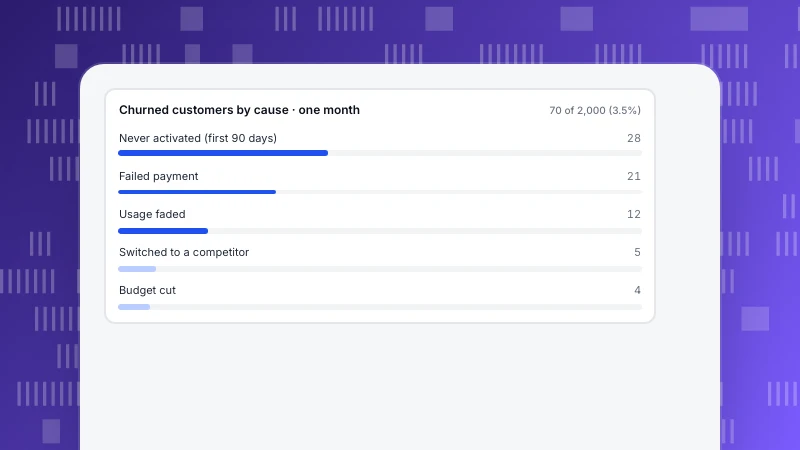
Churn prevention: 12 strategies, matched to why customers leave
Churn prevention works best when you first split churn by type and timing: failed payments, customers who never activated, and customers whose use faded. Early signals, 12 strategies by lifecycle stage, a worked plan and how to measure what you saved.
Read more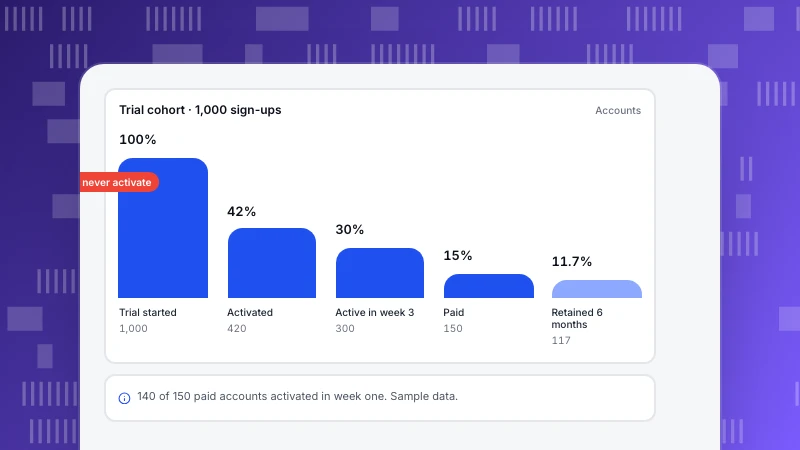
SaaS customer journey: stages, metrics and where revenue leaks
The SaaS customer journey from awareness to expansion: eight stages with goals and metrics, how to map and measure them, and a trial cohort example showing activation as the bottleneck.
Read more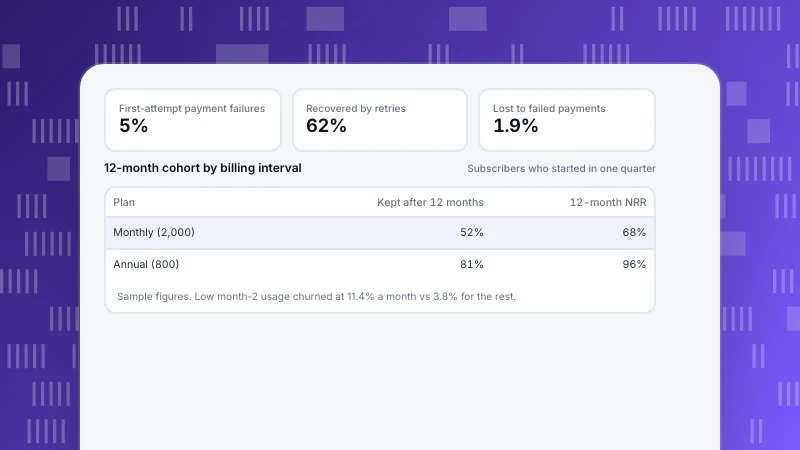
Subscription analytics: the metrics, the data and a 12-month cohort example
Subscription analytics measures how recurring revenue is won, kept, expanded and lost. The key metrics with formulas, how to join billing with product usage, and a worked 12-month cohort that found early churn signals and hidden payment failures.
Read more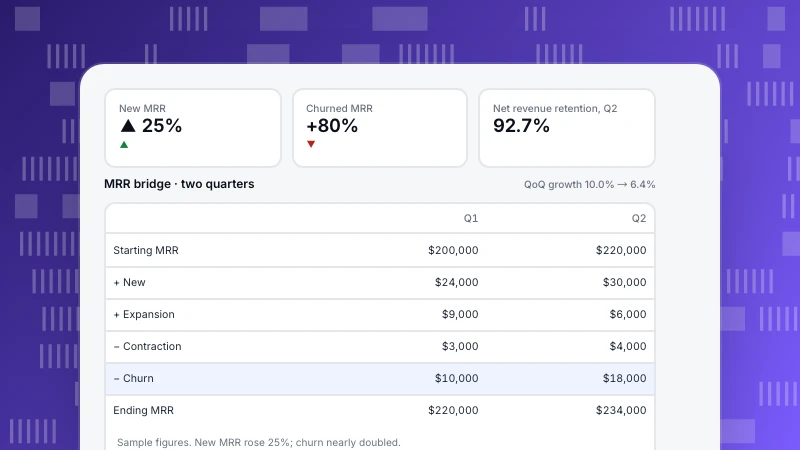
Revenue growth rate: formula, CAGR, benchmarks and a worked MRR bridge
How to calculate revenue growth rate month over month, quarter over quarter and year over year, when to use CAGR, what counts as good growth, and a worked MRR bridge showing why growth slowed while new sales rose.
Read more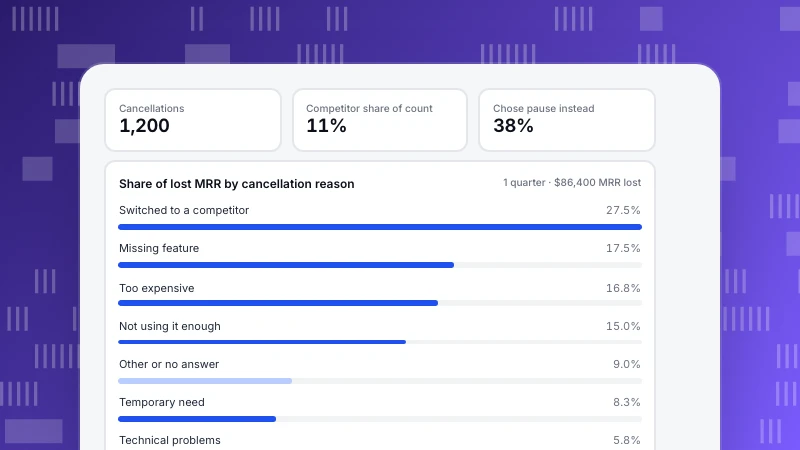
Cancellation reasons: the common ones, how to ask, and what they cost
Why customers cancel subscriptions, how to design a cancellation survey that does not block cancelling, and a worked quarter of 1,200 cancellations where weighting by revenue changed which problem to fix first.
Read more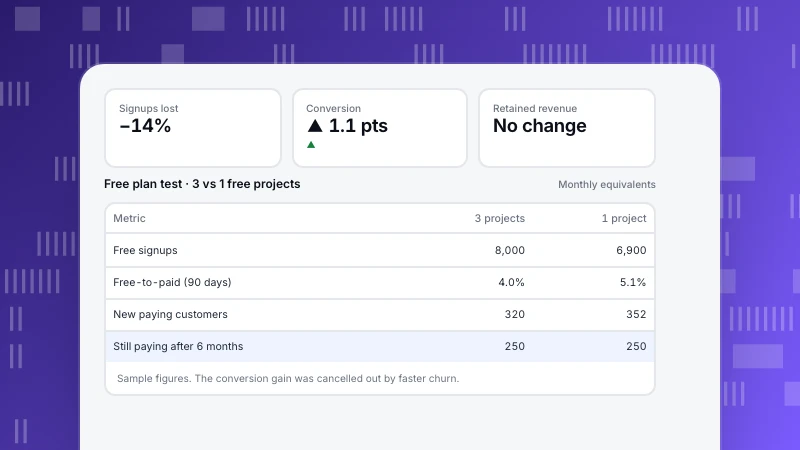
Freemium model: how it works, how to design the free plan, and a worked test
Freemium gives a basic plan away for free and charges for more. How it compares with free trials and reverse trials, how to set free-plan limits, and a worked test where a stricter free plan raised conversion but not revenue.
Read more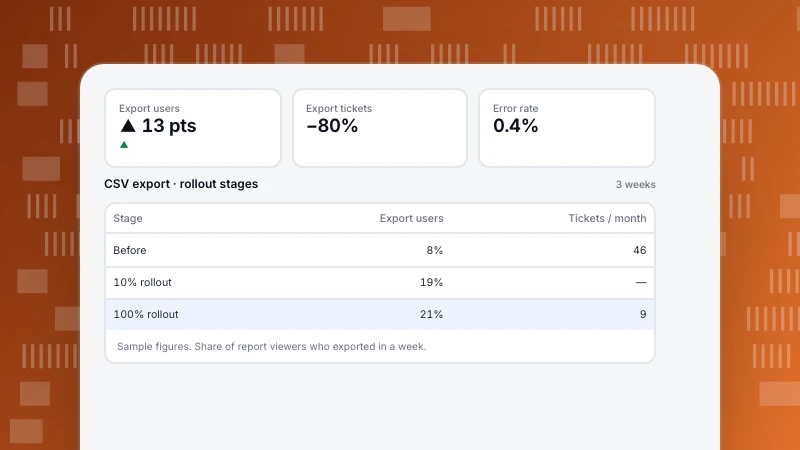
What does a product engineer do? Role, skills and a feature end to end
A product engineer owns product outcomes, not just code. How the role differs from software engineers and product managers, daily responsibilities, skills, and a worked feature from support tickets to full rollout.
Read more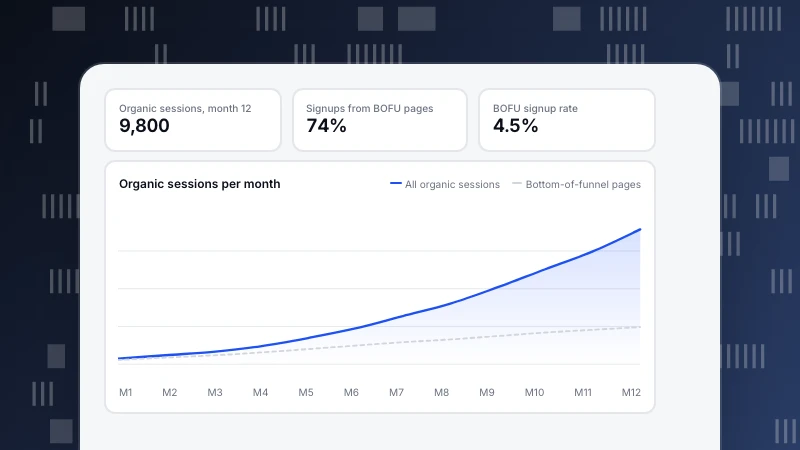
SEO for startups: a 12-month plan that turns searches into signups
When a startup should start SEO, which keywords a new domain can actually win, a 12-month plan, and a worked year where bottom-of-funnel pages brought 28% of organic traffic and 74% of signups.
Read more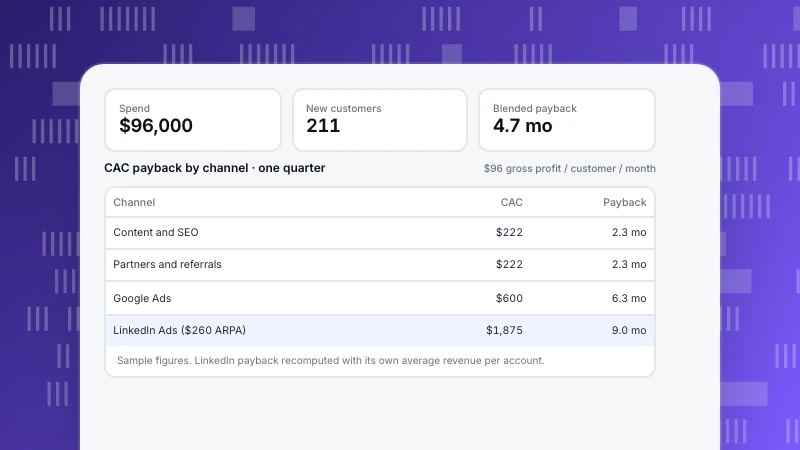
SaaS marketing: strategies, funnel and the metrics that decide budget
How SaaS marketing differs from one-off sales, the six-stage funnel and its metrics, eight strategies, and a worked quarter showing why channels should be compared on payback and churn, not CAC.
Read more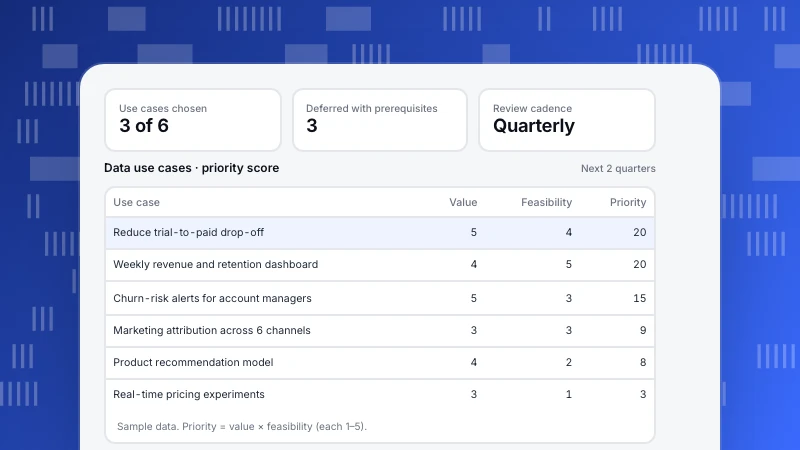
Data strategy: components, a worked example and a one-page plan
A data strategy links business goals to how data is collected, governed and used. Offense vs defense, the seven components, a worked example scoring six use cases into a 90-day plan, five steps to write one and the mistakes that stall it.
Read more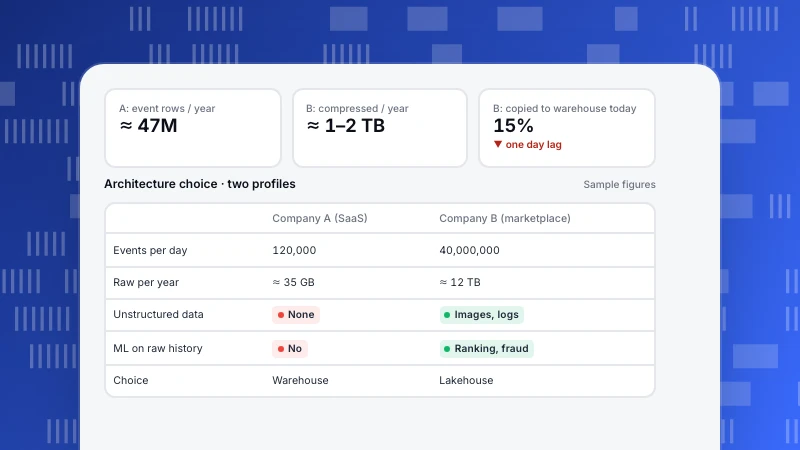
Data lakehouse vs data warehouse (and data lake): how to choose
A warehouse stores modeled tables for SQL, a lake stores raw files cheaply, and a lakehouse adds warehouse features to lake storage. A three-way comparison, why lakehouses appeared, two worked company examples and a decision checklist.
Read more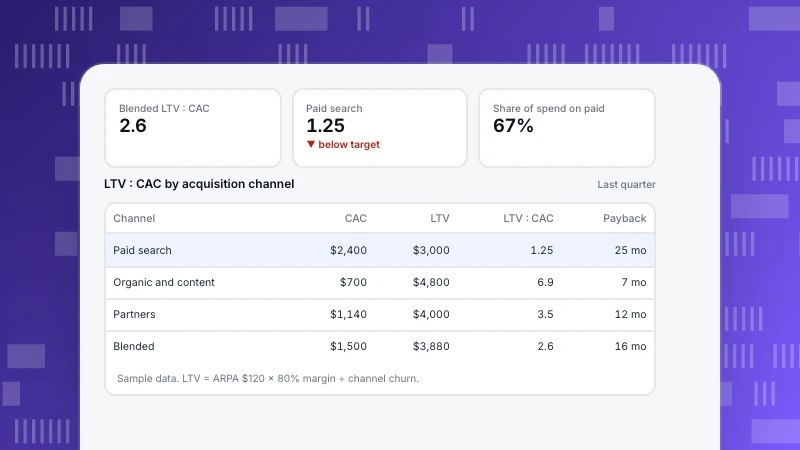
LTV to CAC ratio: how to calculate it, benchmarks and what it hides
The LTV to CAC ratio compares a customer’s lifetime gross profit with the cost of acquiring them. Formulas, a worked example where a healthy blended 2.6 hides a paid channel at 1.25, benchmarks, payback and the mistakes that inflate the ratio.
Read more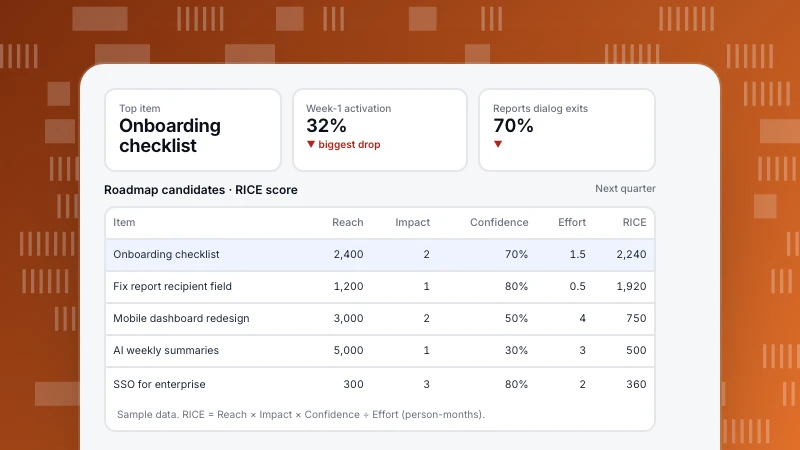
Product roadmap: types, how to build one and how to prioritize with data
A product roadmap links strategy to what gets built next. Four roadmap types compared, an 8-step process, a RICE prioritization example with reach taken from funnel data, and the mistakes that turn roadmaps into feature factories.
Read more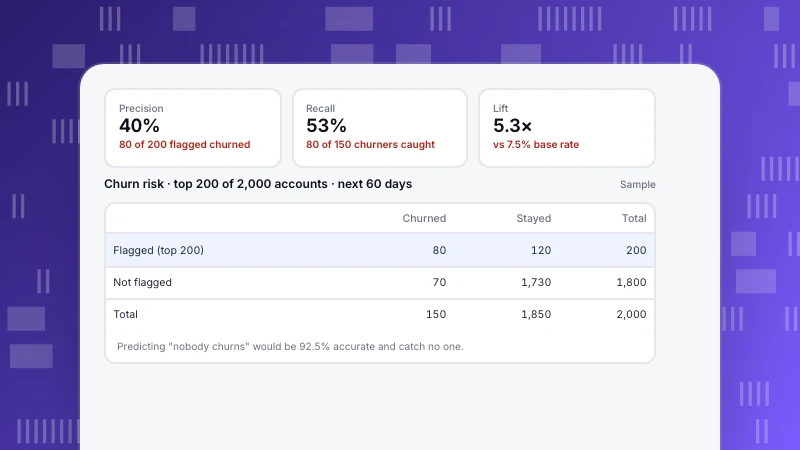
Customer Churn Prediction: Signals, Simple Models and How to Judge Them
Churn prediction flags customers likely to cancel early enough to do something about it. Which signals predict churn, a rule-based way to start, and a worked example of judging a model by precision, recall and lift.
Read more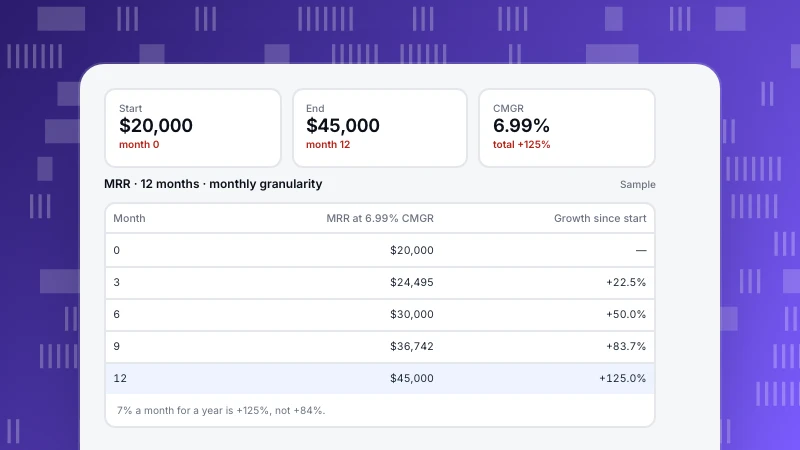
Compound Monthly Growth Rate (CMGR): Formula and Examples
Compound monthly growth rate (CMGR) is the steady monthly rate that takes you from a starting value to an ending value. The formula, a 12-month MRR example, why averaging monthly growth rates overstates growth, and how to calculate it in a spreadsheet.
Read more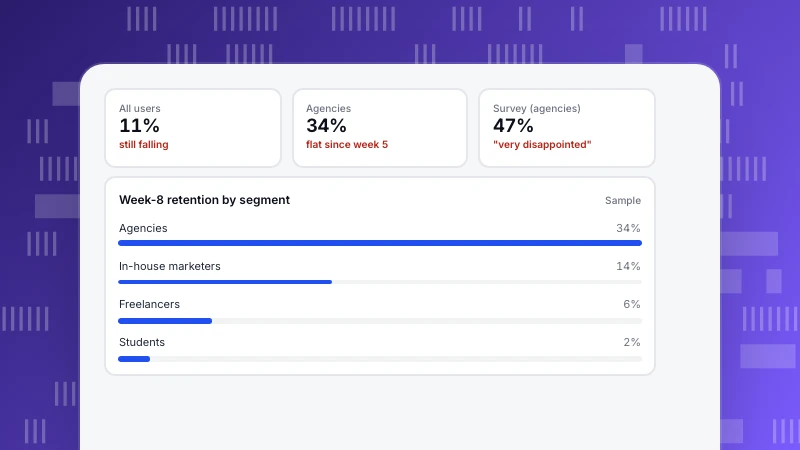
Product-Market Fit Metrics: Six Signals and How to Read Them
How to measure product-market fit with six signals: a retention curve that flattens, repeat use, organic growth, the "very disappointed" survey, willingness to pay and referral. How to read them together, with a sample.
Read more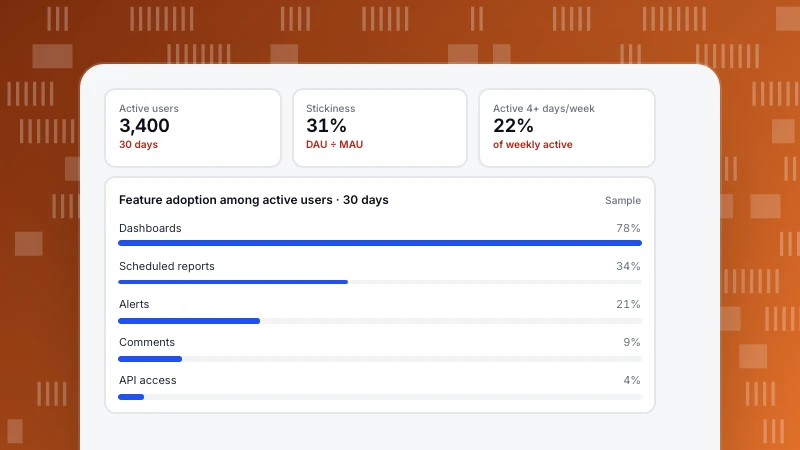
Product Usage Analytics: The Five Metrics and How to Use Them
Product usage analytics measures how people use your product: which features, how often and how deeply. Five usage metrics with formulas, user vs account views and a sample feature table that led to a decision.
Read more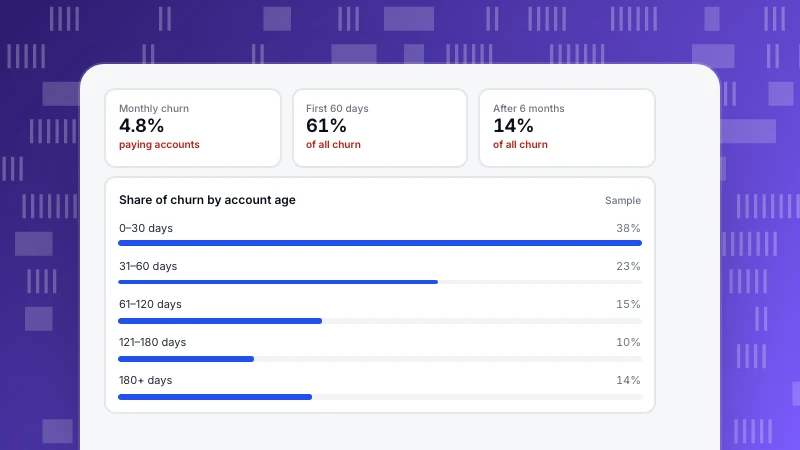
Customer Churn Analysis: A Five-Step Method With an Example
Customer churn analysis finds who leaves, when, and after what. A five-step method you can run with ordinary event data, the behaviour signals to compare, and a sample that leads to a concrete fix.
Read more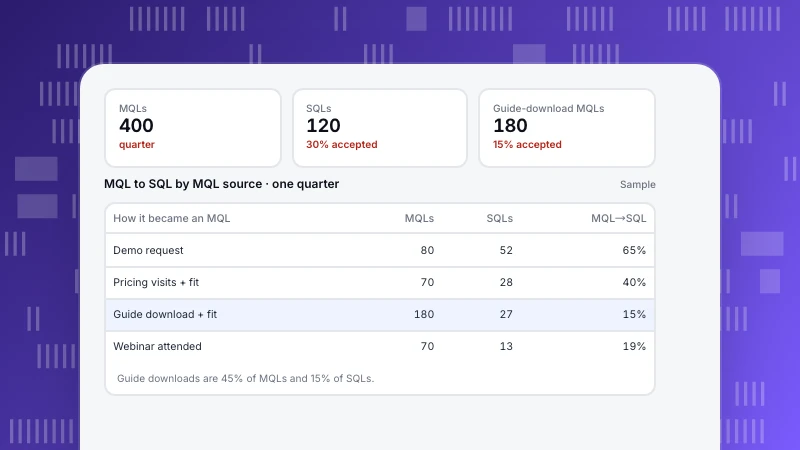
MQL vs SQL: The Difference, and How to Make the Handoff Work
An MQL is a lead marketing judges ready for sales attention; an SQL is a lead sales has accepted as a real buying opportunity. Definitions, a scoring model from fit and behaviour, and MQL-to-SQL rates by source in a worked example.
Read more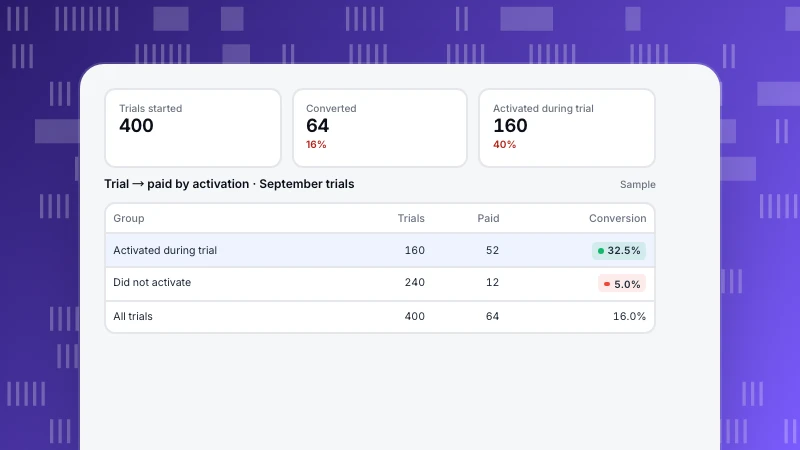
Free Trial Conversion Rate: How to Calculate It and What Moves It
Trial-to-paid conversion looks like a simple ratio, but extensions, early upgrades and different trial types change the answer. How to calculate it by trial-start cohort, and why activation inside the trial is the number that moves it.
Read more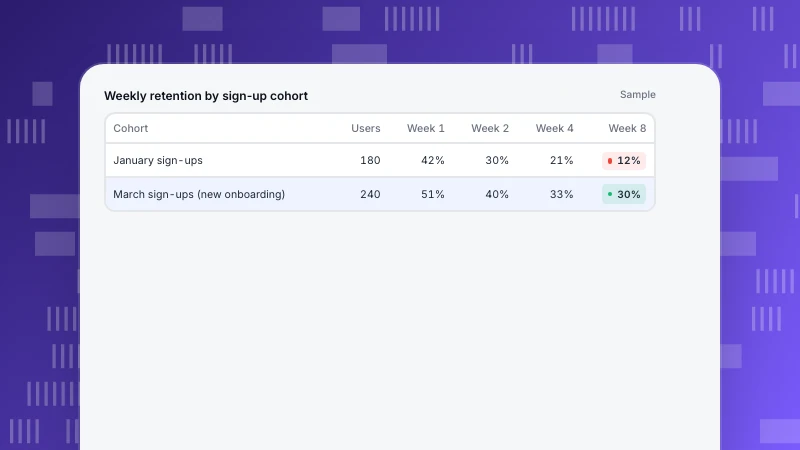
Startup Metrics by Stage: What to Measure Before and After Product-Market Fit
The right startup metrics depend on stage. What to measure before product-market fit, in early traction and in growth, the question each metric answers, the few events to instrument, and why a flattening retention curve matters more than any total.
Read more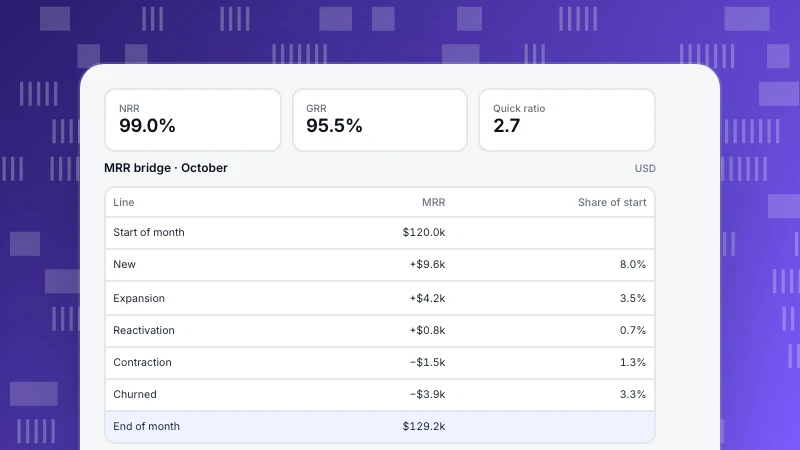
SaaS Metrics: One MRR Bridge and the Ratios Built on It
SaaS metrics tied together by one MRR bridge: new, expansion, reactivation, contraction and churned MRR, with NRR, GRR, quick ratio and CAC payback computed from it, and the product signals that lead each line.
Read more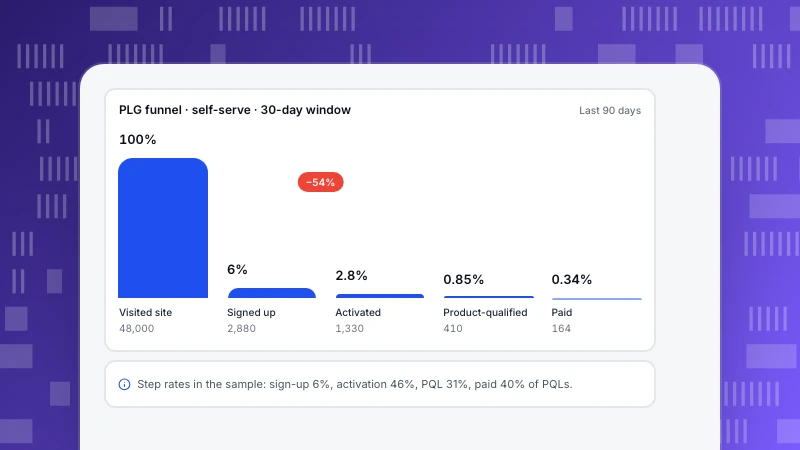
Product-Led Growth Metrics: One Funnel from Visitor to Expansion
PLG metrics as one connected funnel from visitor to expansion: the event behind each metric, how to define a product-qualified lead from usage, and how to measure team products by account.
Read more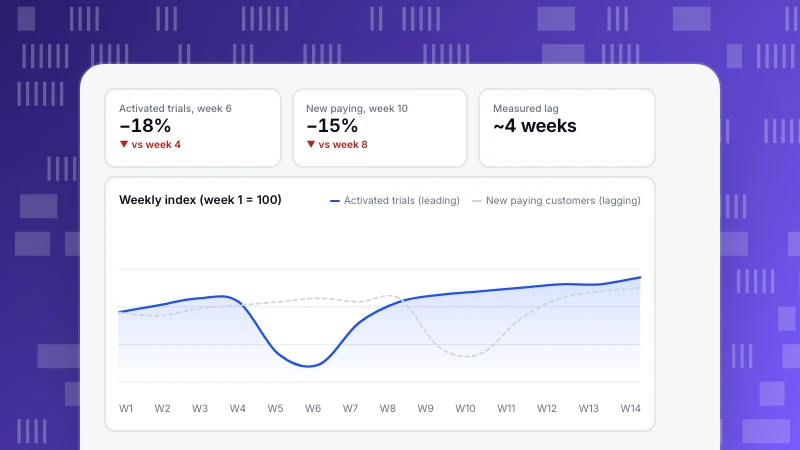
Leading vs Lagging Indicators for Product and Growth Teams
Leading vs lagging indicators with product and website examples by funnel stage, a method to find and validate a leading indicator in your own data, and how to alert on it.
Read more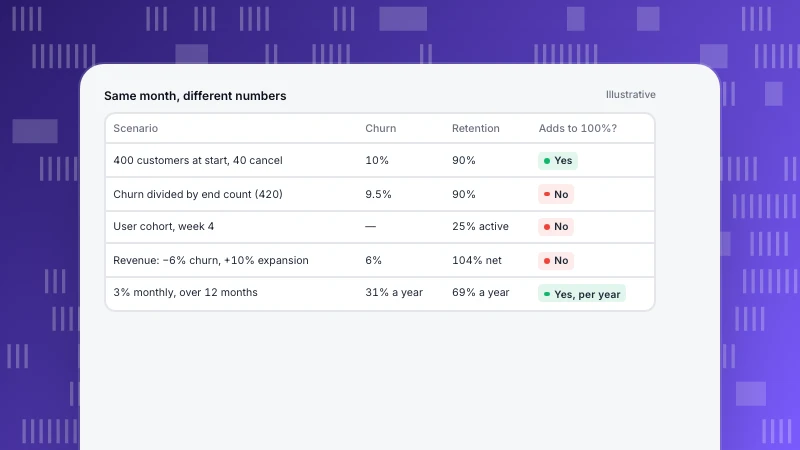
Churn Rate vs Retention Rate: When They Add Up and When They Do Not
Churn and retention look like two sides of one number, but they only add up to 100% in one case. Worked scenarios for customers, revenue and user cohorts, plus net revenue retention and annual churn.
Read more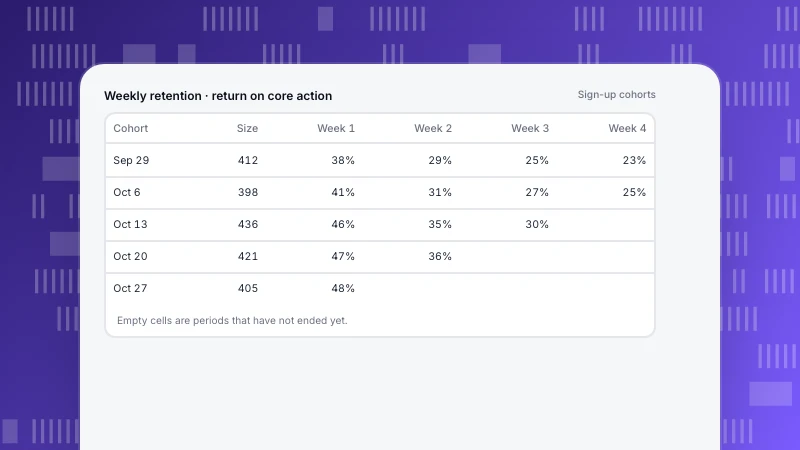
Retention Metrics: Which Rate to Use and How to Calculate It
The retention metrics that actually differ, how to calculate retention rate with a worked example, the counting choices that change the number, and which metric fits which business.
Read more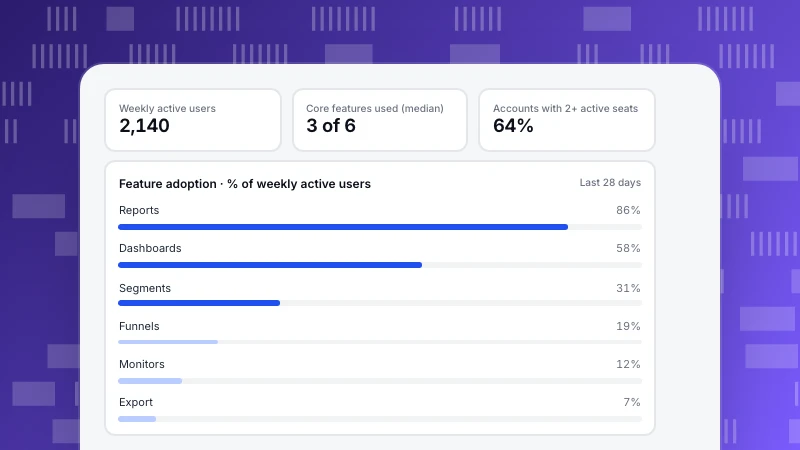
How to Measure Product Adoption, Feature by Feature
How to measure product adoption with events: how it differs from activation, the four dimensions of feature adoption, choosing the right denominator, and account-level adoption for B2B products.
Read more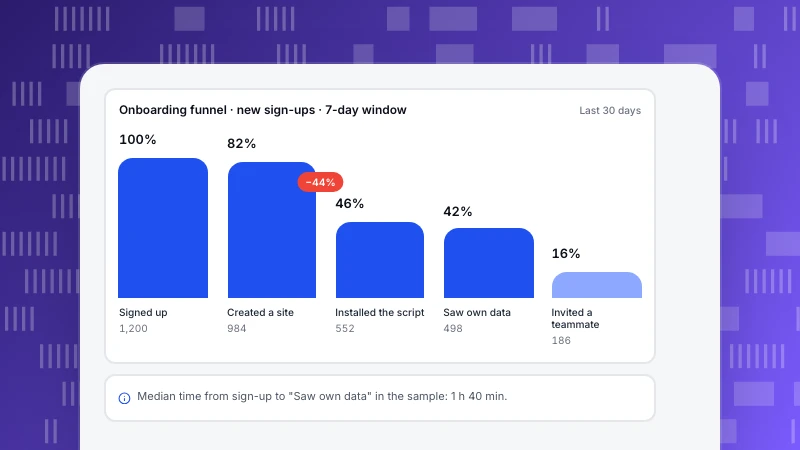
User Onboarding Metrics: Activation, Time to Value and the Funnel
Onboarding metrics for software products: how to define activation and test it, build the onboarding funnel from events, measure time to value, and tie onboarding to retention.
Read more