Web performance
15 articles tagged “Web performance”. Tags cut across categories, so you may find analytics, chat and product notes side by side.
Tagged Web performance
15 articles
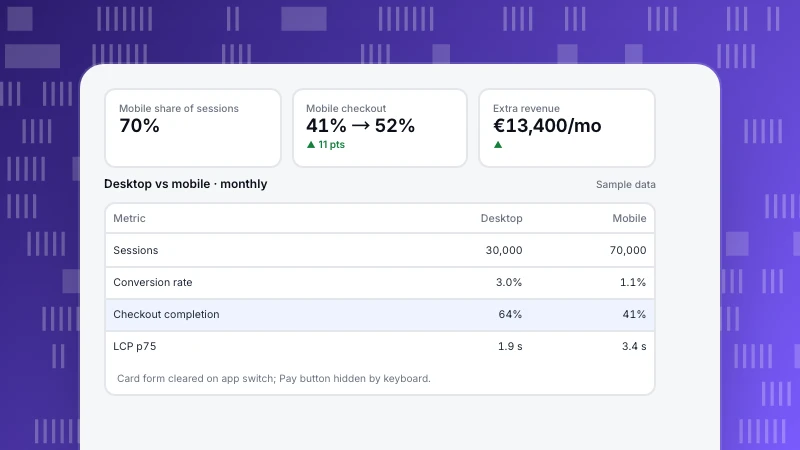
Mobile CRO: why mobile converts less and how to fix it
Mobile conversion rate optimization: why phone visitors convert less, a mobile CRO checklist, a five-step process and a checkout example that added 210 orders a month.
Read more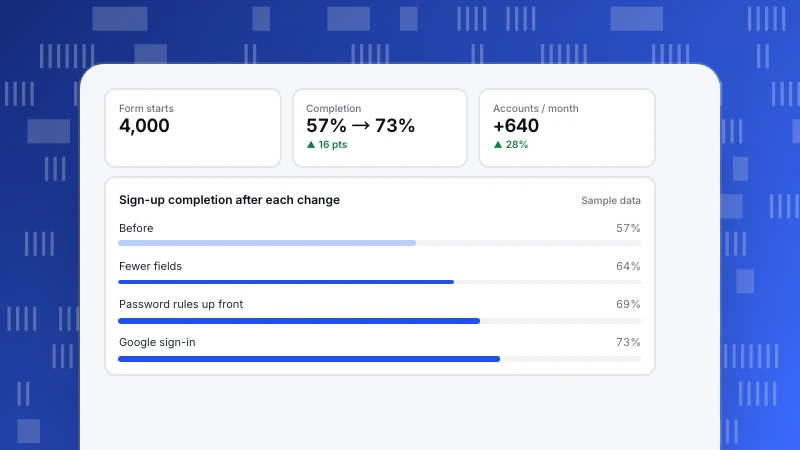
UX optimization: how to improve user experience with data
UX optimization finds where users struggle and removes the friction, one measured change at a time. The metrics to track, ten techniques, the optimization loop and a sign-up form example.
Read more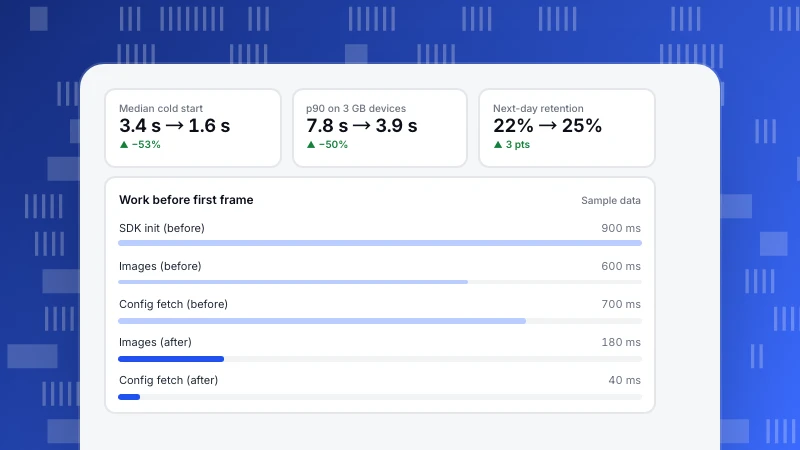
How to improve app performance: metrics, targets and 8 fixes
Improve mobile app performance with the metrics that matter (cold start, jank, ANR, crashes, memory, network), official thresholds, eight steps and a worked example that halved cold start.
Read more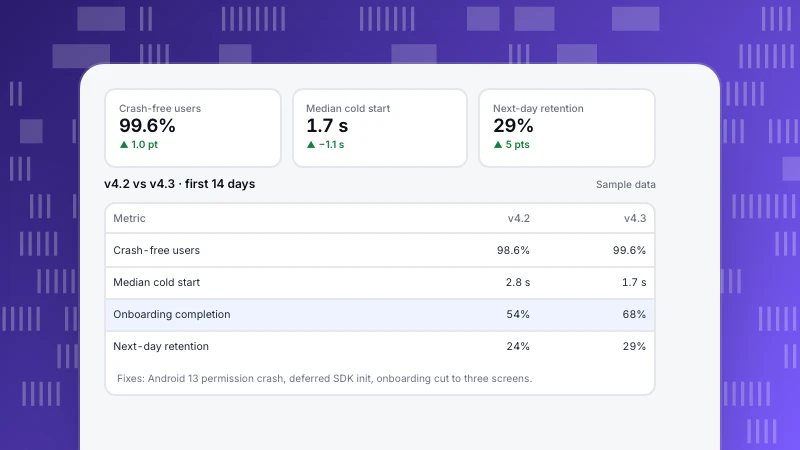
Mobile app optimization: stability, onboarding, conversion and store
Mobile app optimization across four areas: stability and performance, onboarding and engagement, conversion and store visibility. A seven-step process, a version comparison example and common mistakes.
Read more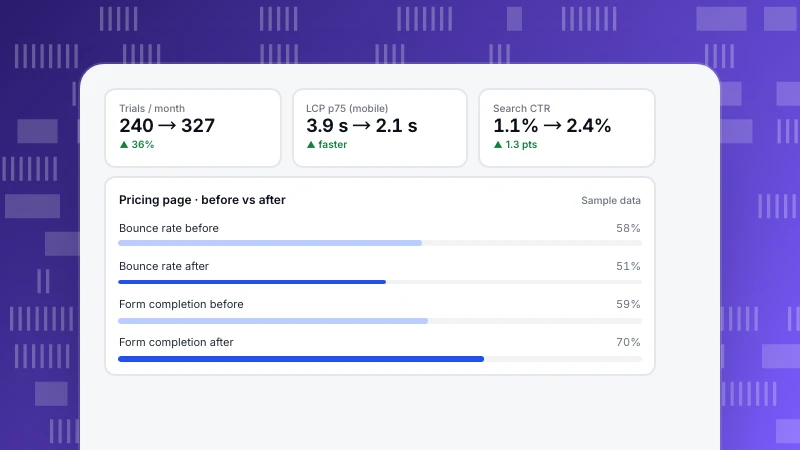
Website optimization: a 6-step guide to speed, search, UX and conversion
Website optimization makes a site faster, easier to find and easier to convert on. The four layers to measure, a six-step process, a worked example with three fixes, and common mistakes.
Read more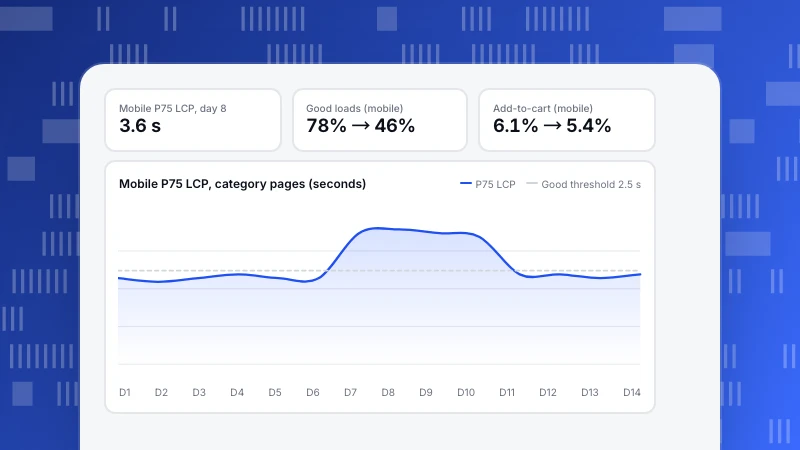
Web performance monitoring: RUM vs synthetic, metrics and a worked regression
How to monitor website performance continuously: real user monitoring vs synthetic checks, Core Web Vitals at P75, and a worked release where mobile LCP jumped from 2.3 to 3.5 seconds and add-to-cart fell.
Read more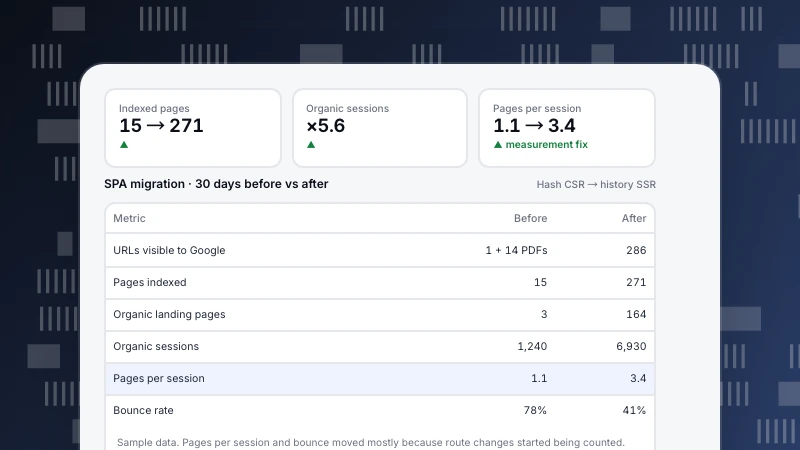
Single-page application SEO: routing, status codes and analytics
Single-page apps need every client-side view to behave like a real page for crawlers and analytics. Seven requirements, history vs hash routing, soft 404 fixes, a migration that grew indexed pages from 15 to 271, and how to count SPA pageviews correctly.
Read more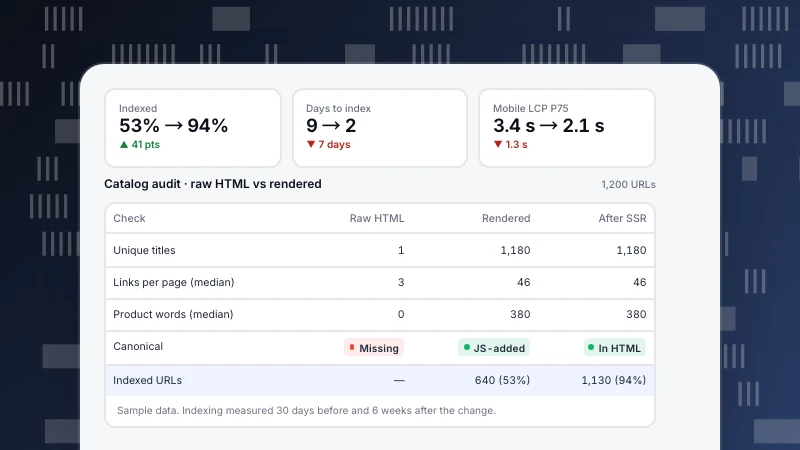
JavaScript SEO: how Google and AI crawlers handle JS, and how to fix it
JavaScript SEO makes sure crawlers can see content that scripts produce. How Google crawls, renders and indexes JS, why most AI crawlers see an empty shell, rendering strategies, common problems and a catalog audit that went from 53% to 94% indexed.
Read more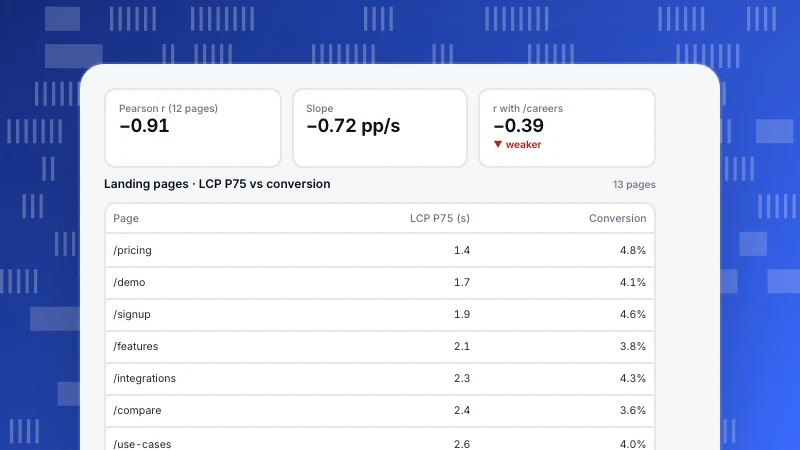
Scatter plots: how to read them, make them and avoid false conclusions
A scatter plot shows how two numeric variables move together. How to read direction, form, strength, outliers and clusters, with a page-speed vs conversion example where one outlier flips the conclusion.
Read more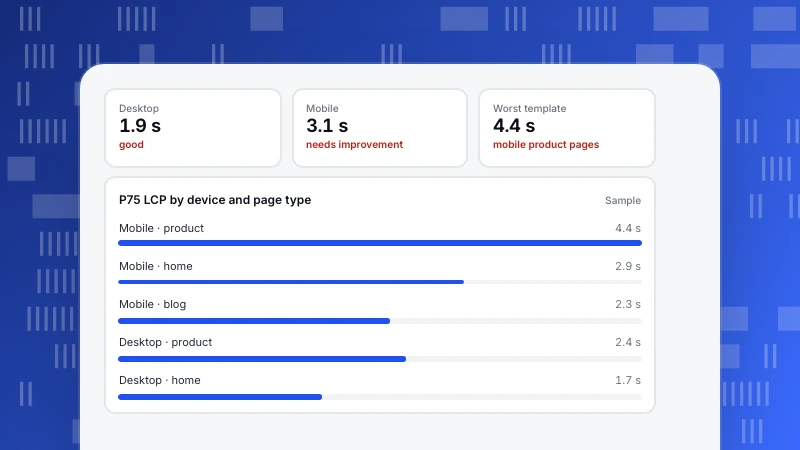
What Is a Good Page Load Time? A Clear Target and How to Check It
A good page load time is when the main content appears within 2.5 seconds for three in four real visits. Why full load time misleads, targets for each timing, and a sample split by device and page type.
Read more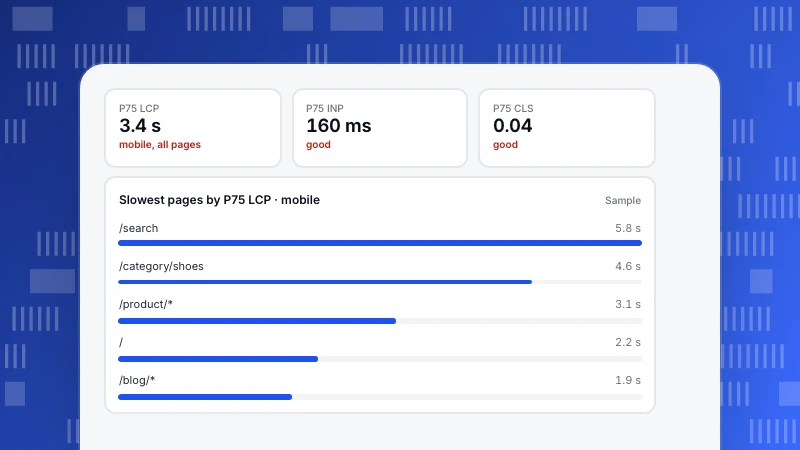
Website Performance Metrics: The Five to Watch and How to Read Them
The website performance metrics that matter: LCP, INP, CLS, FCP and TTFB, their thresholds, why to read the 75th percentile from real users, and a sample that traces a slow page to its cause.
Read more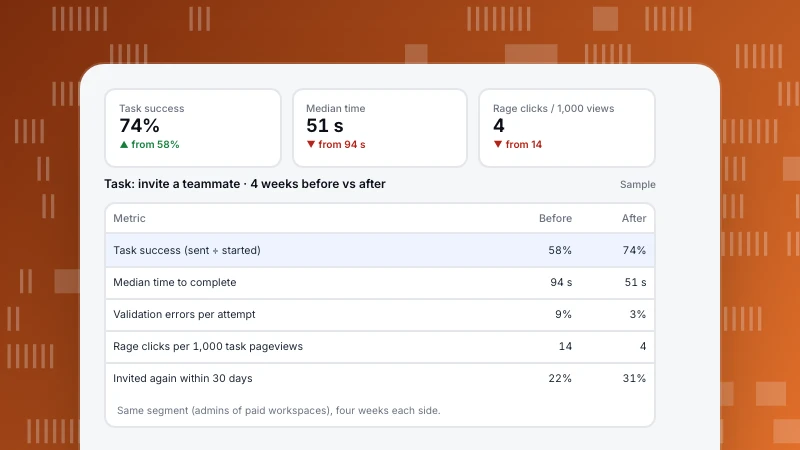
UX Analytics: Measure Whether a Task Got Easier
UX analytics uses behaviour data to measure how easy it is for people to complete tasks in your product or site. Five task metrics, how to define them in events, and a before-and-after example of a redesigned flow.
Read more
How to Reduce Bounce Rate: Find the Pages That Matter, Then Fix the Cause
Reducing bounce rate starts with knowing what your tool counts as a bounce and which pages lose the most visitors. How to rank landing pages, diagnose the cause by source and device, and apply the fix that matches it.
Read more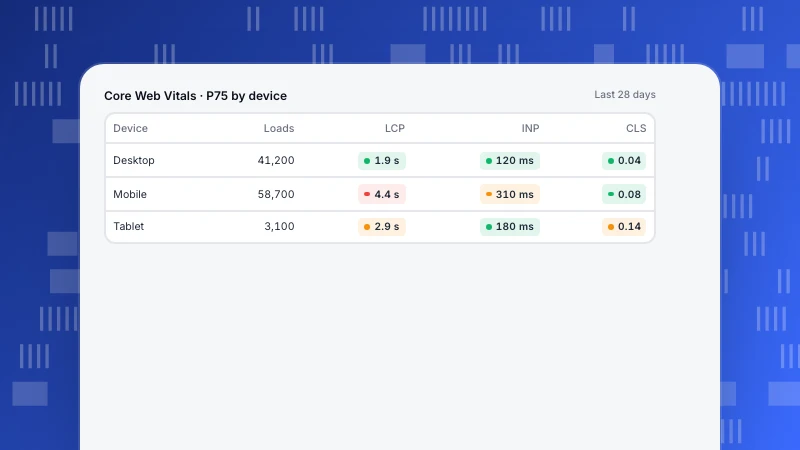
Real User Monitoring: How to Read Speed Data from Real Visits
Real user monitoring (RUM) measures speed in visitors' own browsers. How it differs from synthetic tests, why P75 by device is the default view, how small samples mislead, and how to turn a slow segment into a fix.
Read more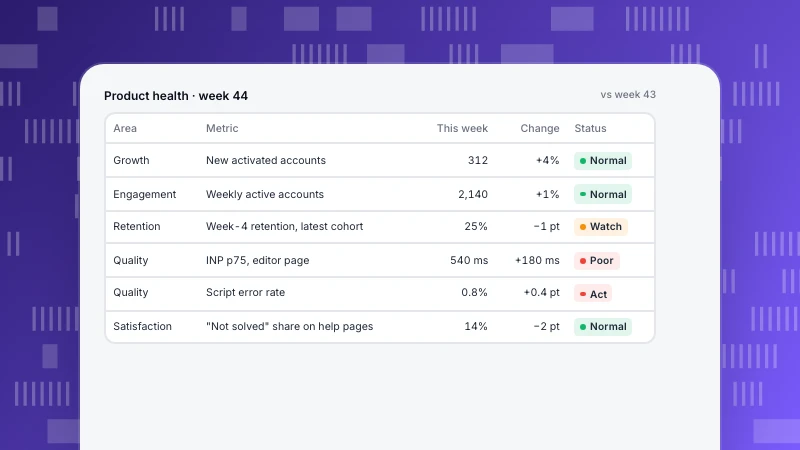
Product Health Metrics: A Weekly Scorecard That Includes Quality
Product health metrics in five areas (growth, engagement, retention, quality, satisfaction) on one weekly scorecard, with thresholds that turn a number amber or red and a routine for reviewing it.
Read more